Dry dog food · OEM & private label
Baked Dog Food OEM & Private Label
Develop a baked dog food SKU around a confirmed process route, finished-kibble specification and practical sample and packaging checks.
For pet brands and importers, baked positioning should connect to a product that can be specified, evaluated and supplied consistently. ZoePetSup can discuss a baked dog-food development direction alongside extruded options. The selected production specification, ingredient declaration, packaging, sample terms and order requirements are confirmed for the project.
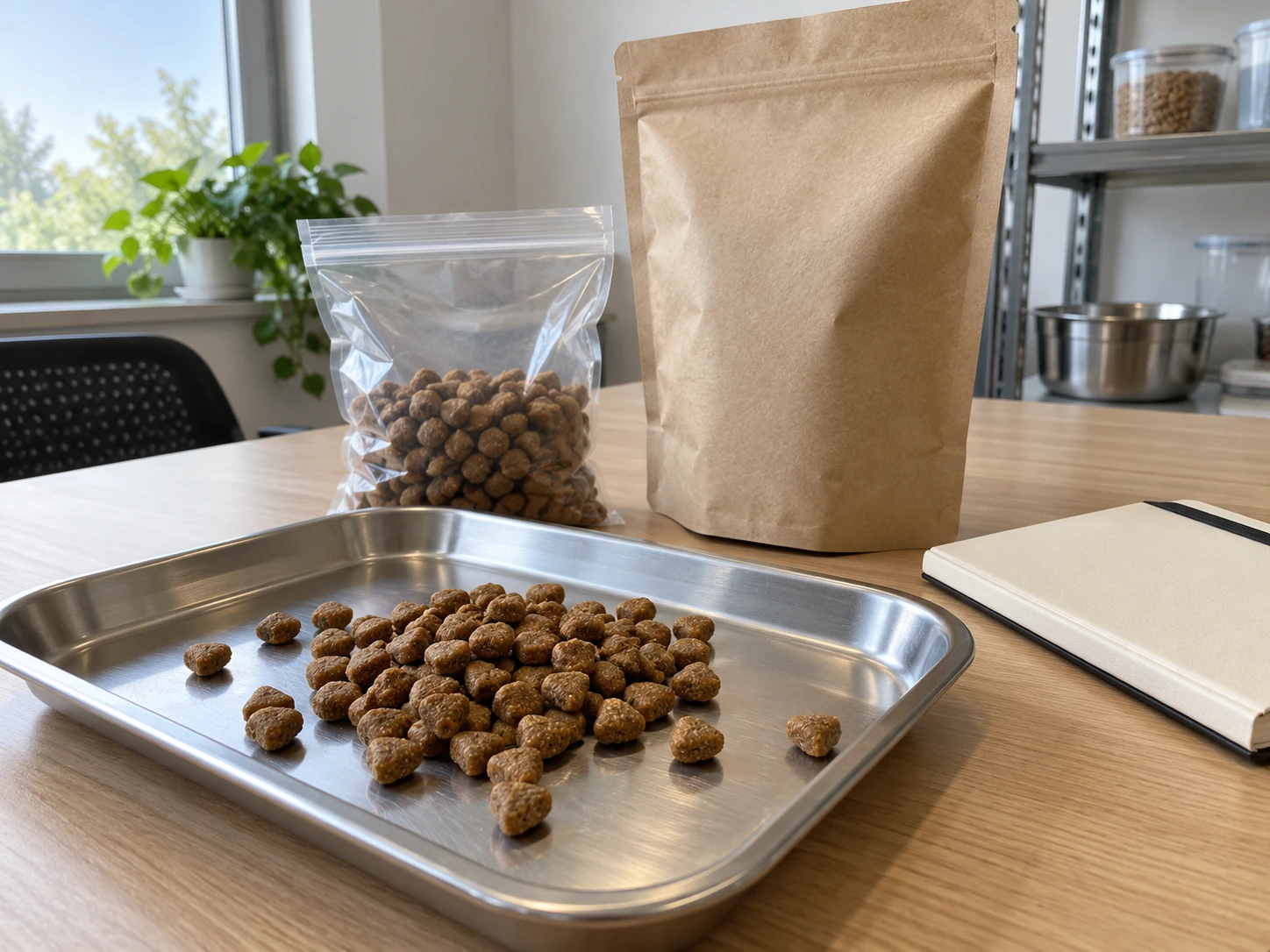
Connect the market, product direction and pack plan before approving the order.
Your sourcing decisions
Explore this project
01 · Your product brief
Compare baked and extruded product routes
Choose the process route around the product brief and the characteristics you want to compare. The process name alone does not establish nutritional quality or a finished-product outcome.
Explain whether your brand wants a distinct baked range, a particular texture or a different retail proposition. If you have an existing product benchmark, identify the features that matter: physical shape, consistency, handling, feeding acceptance or packaging. Confirm the actual route proposed for the selected SKU before approving artwork that describes it.
Baked direction
Discuss the proposed process and the sample characteristics that should distinguish the SKU in your range.
Extruded alternative
Compare an extruded route when it may also meet the required product and commercial brief.
Decision basis
Review the specification, sample results and quotation together. Avoid treating process terminology as proof of nutritional superiority.
02 · Your product brief
Choose the role of the baked SKU
Define the baked SKU's feeding role, intended life stage, dog-size scope and channel before selecting its pack design.
A premium-style retail product and a distributor's bulk range can require different physical specifications, packaging and order mixes. Set out the intended price position and essential requirements, while keeping the final project quotation separate from an early commercial target.
| Range decision | Buyer input | Product question |
|---|---|---|
| Life stage | Adult, puppy or senior concept | Applicable nutrition basis and label review for the selected product |
| Dog-size scope | Small, medium or large dog audience | Proposed kibble size, shape and handling criteria |
| Channel | Specialist retail, online or distribution | Pack format, information and shipping requirements |
| Range relationship | Standalone baked line or extension of an existing range | How the SKU differs and which comparison sample is useful |
03 · Your product brief
Confirm the process and finished-product specification
Ask for the production route and the finished-product acceptance specification as separate, connected parts of the proposal.
Confirm the process proposed for the actual product, together with the ingredient declaration and the analytical and physical indicators needed for approval. Processing temperature, time, equipment, batch size and commercial capacity are project-confirmation items; this page does not assign fixed values to them.
Discuss chicken, beef, lamb or fish flavour directions against the intended dog-food specification. Identify preferred ingredients, exclusions and document requirements. Agree how a proposed ingredient or process change would be reviewed before production or a repeat order.
Move the brief forward
Bring the open questions to your project review
Share the destination, product benchmark, pack sizes and estimated quantities you have confirmed so far.
04 · Your product brief
Assess texture, breakage and palatability
Build sample acceptance around texture, piece integrity and handling as well as appearance and odour.
A desk sample should help answer the actual procurement question. If you are concerned about broken pieces on arrival, agree the sampling point, handling or transport simulation, inspection method and acceptance limits before comparing results. Any feeding or palatability evaluation needs its own stated method and scope.
Texture and shape
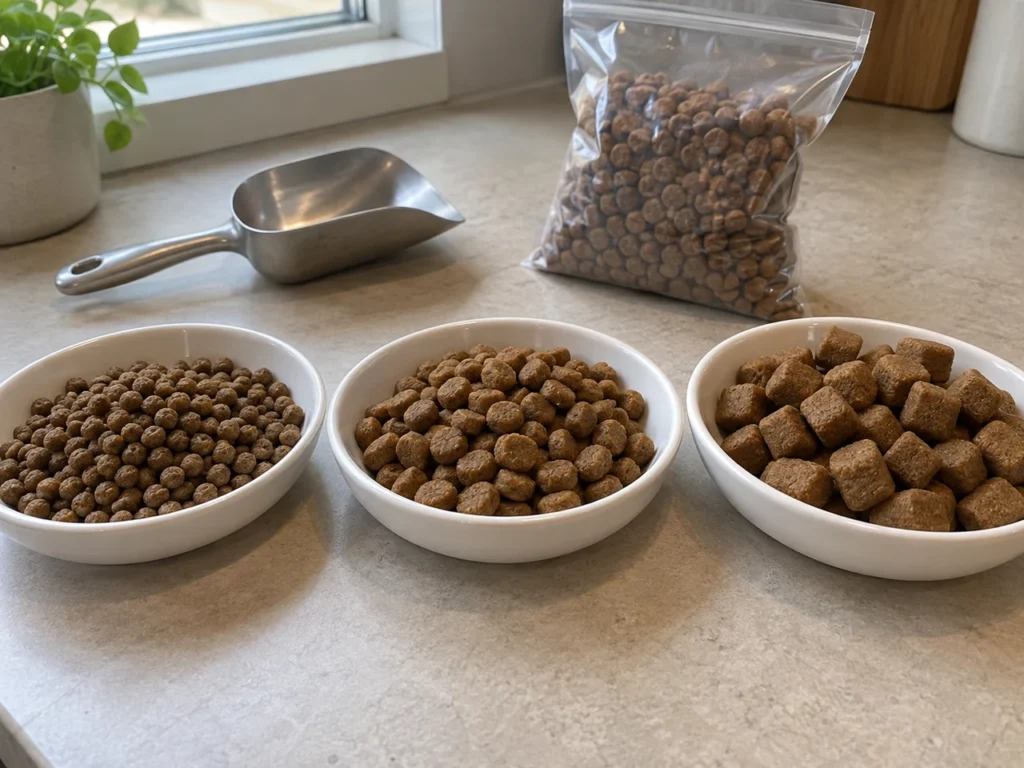
Review the agreed kibble dimensions, physical texture, consistency and ease of handling against an identified benchmark.
Breakage and fines
Define how whole and broken pieces will be assessed, including the conditions and limits used for acceptance.
Feeding acceptance
Specify the observations or evaluation information required and keep the limits of informal sample feedback clear.
05 · Your product brief
Review packaging and shelf-life evidence
Review the selected food and pack together when agreeing storage instructions and shelf-life support.
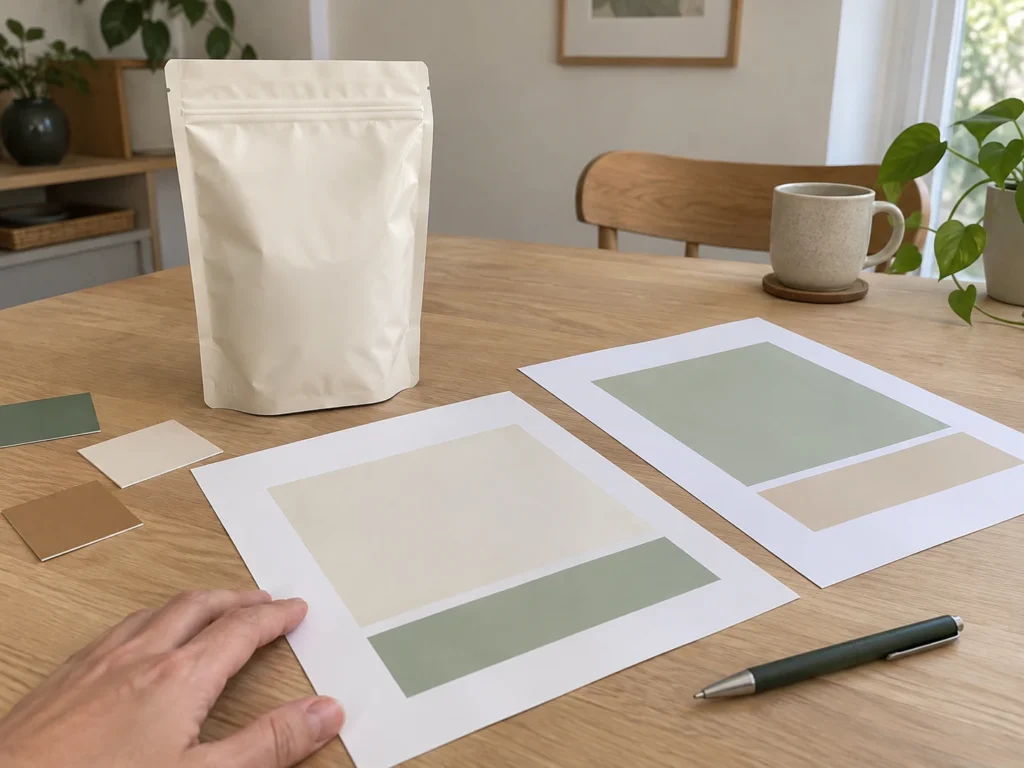
Dog-food pack directions include 1–3 kg retail, 5–8 kg family and 10–20 kg bulk formats. Confirm the actual material, closure, fill, artwork and carton requirements for your market. A shelf-life statement should relate to the finished product, selected packaging and intended storage conditions.
Define the distribution conditions
Provide destination, handling route, storage expectations and any retailer or distributor requirements.
Check the supporting information
Agree which product, packaging, stability and finished-test information is needed for the selected SKU.
Approve the final pack
Connect artwork, label wording, product specification and packaging version before placing the commercial order.
06 · Your product brief
Build the sample and quotation brief
A useful baked-dog-food enquiry identifies the process question and the order plan together.
Send your destination, sales channel, intended life stage and dog-size scope, flavour and ingredient preferences, benchmark, pack sizes, artwork status and estimated quantity per SKU. Sample charges, development schedule, product MOQ, packaging minimums, quotation basis and lead time are confirmed for the selected brief.
Is baked food automatically better than extruded food?
The process name alone does not establish that conclusion. Compare the intended nutrition basis, finished specification, sample characteristics and supporting information for the actual products.
Can I request a particular baking temperature or time?
Include it as a technical requirement for review. Confirm feasibility and the actual production specification with the project team rather than assuming a fixed process applies to every product.
Can we compare baked and extruded samples?
Discuss both routes in the brief and identify the characteristics you want to compare. Sample availability, charges, evaluation scope and timing are confirmed for the project.
Connected procurement decisions
Continue planning your range
Dry dog food manufacturing
Explore this decision →Adult dog dry food reference
Explore this decision →Adult dog formula direction
Explore this decision →Plan a private label dog food range
Explore this decision →Discuss custom dog food development
Explore this decision →Plan your OEM food samples
Explore this decision →Review order minimums
Explore this decision →Prepare a useful quotation brief
Explore this decision →Start with your requirements
Tell Arlo about your baked dog food project
Share your destination market, intended product position, ingredient and kibble preferences, pack sizes and estimated quantity per SKU. Identify the questions you want to resolve first.
Your contact at ZoePetSup
Hi, I’m Arlo.
Send the requirements you have confirmed and the questions still open. We can review the product, sample and packaging brief together.
- Destination market and sales channel
- Life stage, product and flavour direction
- Pack sizes and quantity per SKU
- Artwork status and target launch window