Dry dog food · OEM & private label
Working Dog Food OEM & Private Label
Source a working-dog or active-dog dry food direction with a clear specification, practical bag format and repeat-order plan.
For distributors, pet brands and professional-channel suppliers, working-dog positioning needs to connect the intended use with a reviewable product brief. ZoePetSup can discuss active and working-dog development directions, including flavour, kibble and bulk or retail packaging. Final nutrient values, feeding information, sample terms and supply conditions are agreed for the selected project.
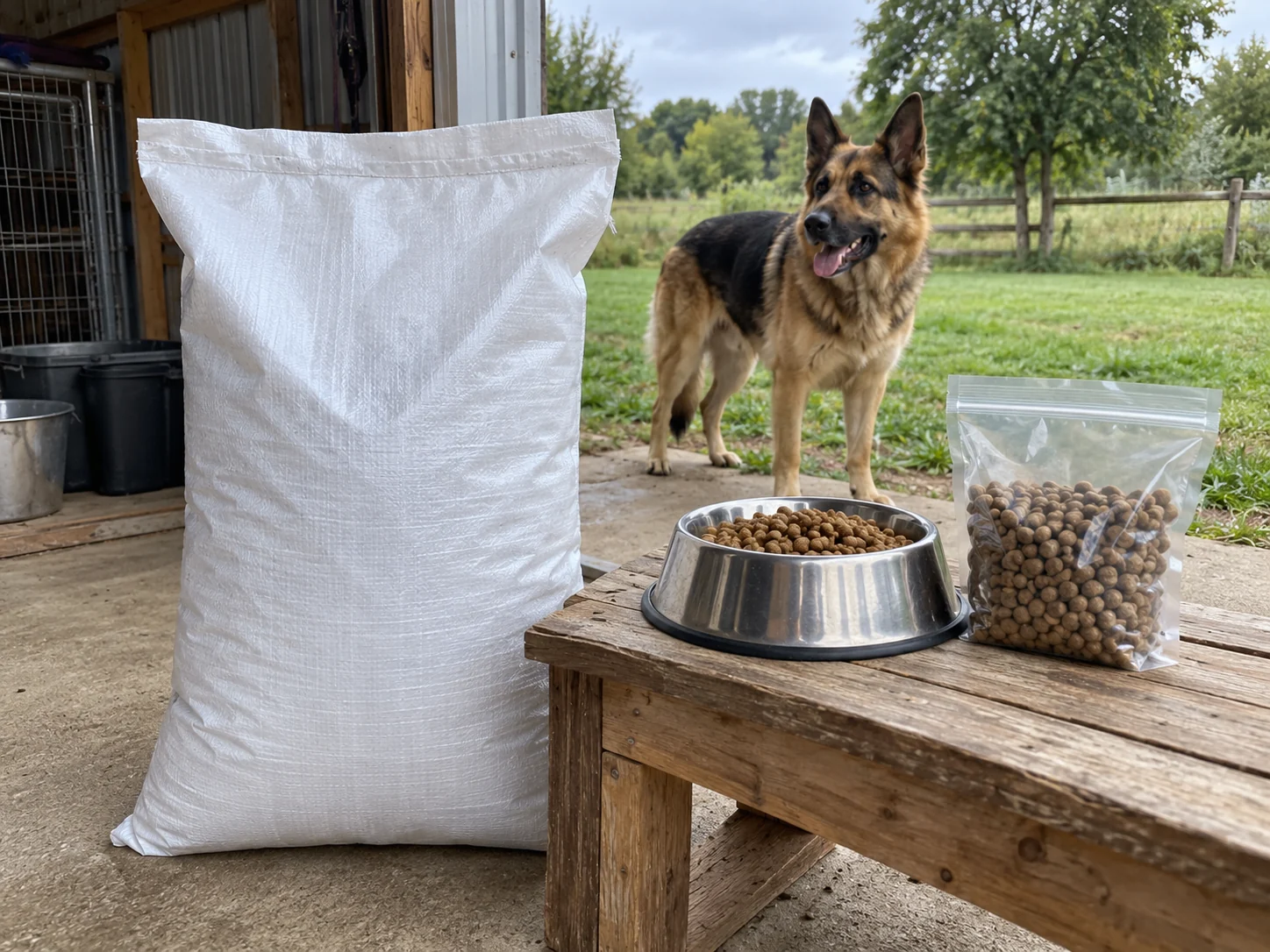
Connect the market, product direction and pack plan before approving the order.
Your sourcing decisions
Explore this project
01 · Your product brief
Describe the working-dog product and sales channel
Describe the actual use and sales channel before choosing a working-dog label. Activity, dog size and feeding context are useful inputs to the product review.
Explain whether the range serves an active-pet retail channel, a distributor's professional customers or another defined audience. Provide the intended life stage and dog-size scope, typical purchasing format and the questions customers ask about the current product. These details help separate a focused SKU from a broad marketing description.
Retail brand
Define the reason customers would choose this SKU alongside your standard adult-dog food and how the pack should explain it.
Distributor supply
List bag weights, delivery handling, label languages and the ordering pattern expected from your customers.
Professional channel
Describe the intended audience, activity context and document needs so the specification can be reviewed for that scope.
02 · Your product brief
Turn activity positioning into a specification brief
Turn active or working positioning into nutrition and specification questions rather than assuming a universal high-energy formula.
Ask for the applicable nutrition basis, energy information, declared analytical indicators and feeding guidance to be reviewed together. A product for one activity context should not automatically be treated as the right specification for every working dog. Final values and statements are confirmed for the selected product and intended market.
| Brief item | Buyer information | Project review |
|---|---|---|
| Intended population | Life stage, dog-size scope and activity context | Nutrition basis, product suitability scope and feeding information |
| Nutrient indicators | Required declaration and information your channel needs | Target specification, reporting basis and supporting tests |
| Physical format | Benchmark size, texture and handling expectations | Proposed kibble and sample acceptance criteria |
| Commercial format | Bag size, estimated order mix and replenishment needs | Product and packaging minimums, quotation and schedule |
03 · Your product brief
Review formula and kibble directions
Review flavour, ingredient preferences and kibble as connected parts of the product, using an identified benchmark when available.
Dog-food flavour directions include chicken, beef, lamb and fish. Send essential ingredient requirements or exclusions with the intended price position and document needs. Discuss the proposed small, medium or large kibble direction against the actual dog-size scope; the final dimensions and physical specification are confirmed in sample review.
Use the adult-dog Product and Formula as starting references for development questions. The working-dog brief needs its own approved specification, nutrient values and label wording. It should not inherit unverified performance statements from a generic adult-food reference.
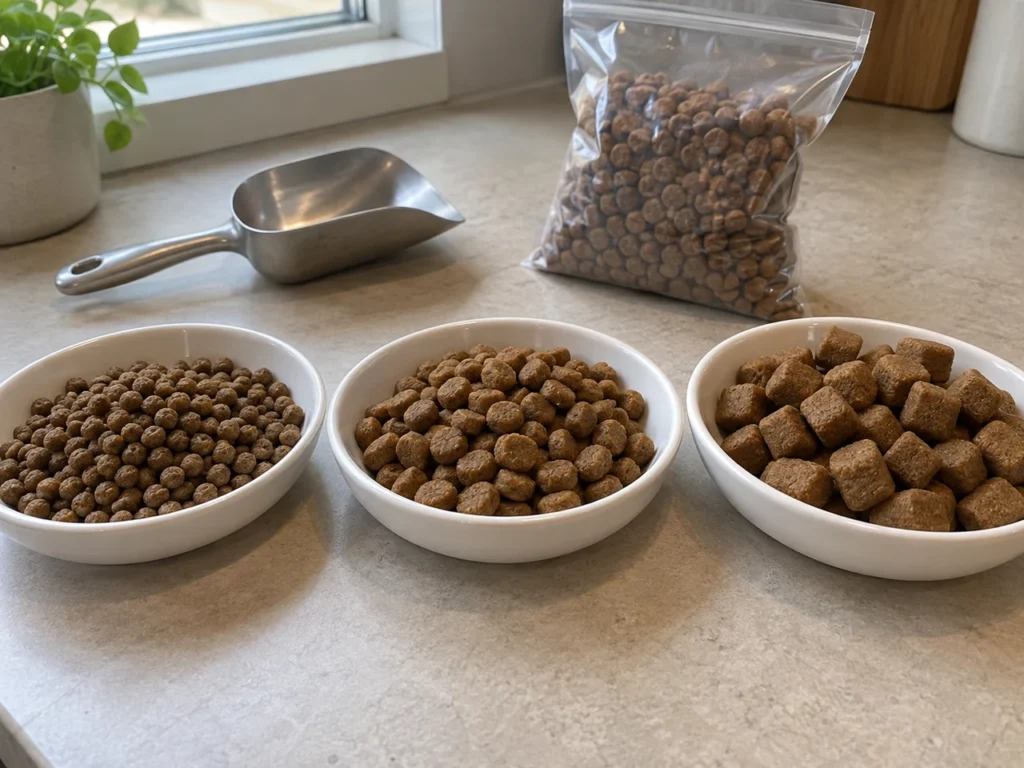
Move the brief forward
Bring the open questions to your project review
Share the destination, product benchmark, pack sizes and estimated quantities you have confirmed so far.
04 · Your product brief
Choose a practical bulk or retail pack
Choose the bag around purchasing frequency, handling and distribution conditions, then confirm the actual material and filling requirements.
Dog-food pack directions include 1–3 kg retail, 5–8 kg family and 10–20 kg bulk bags. Review closure, handling, printing, carton or outer-pack needs, storage information and the language used on the bag. For a bulk range, explain how the bags are moved, stored and supplied to the final customer.
Physical handling
Identify the expected shipping and warehouse conditions and the checks needed for the selected bag construction.
Product protection
Review the product-and-pack combination, intended storage conditions and evidence supporting the proposed shelf life.
Ordering unit
List net weights, SKU quantities and packaging versions separately so the commercial offer reflects the actual order mix.
05 · Your product brief
Approve samples and production checks
Keep an approved sample and written specification that can be used to assess the first delivery and later batches.
The owner-confirmed QC workflow covers raw-material inspection, weighing and mixing, forming, drying and moisture control, coating uniformity, packaging weight checks, finished testing, retained samples and batch traceability. Agree which checks, limits and documents are required for your order instead of relying on a general factory description.
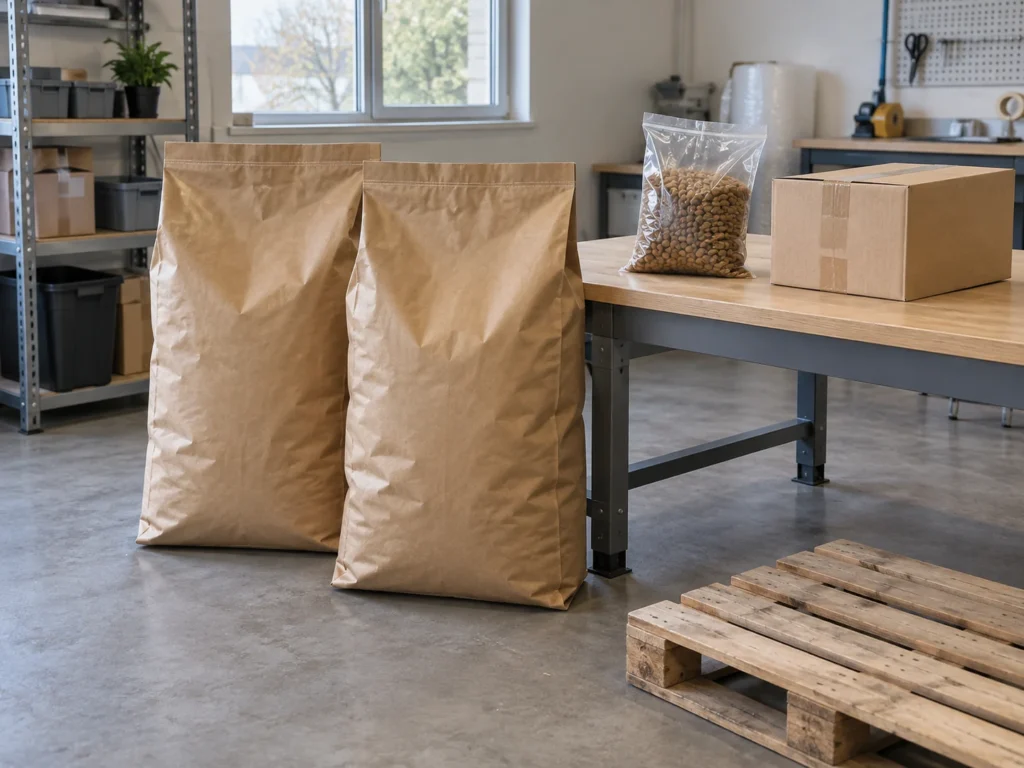
Agree the sample method
Review kibble size, shape, appearance, odour, consistency and handling; define any feeding-acceptance evaluation separately.
Approve the reference
Record the accepted sample ID, specification, packaging and artwork versions, along with any unresolved requirements.
Define batch acceptance
Agree the finished-product information, packaging checks, traceability references and change-review process needed for commercial deliveries.
06 · Your product brief
Plan bulk supply and repeat orders
Build repeat supply around a stable reference and a forecast that identifies each SKU and pack version.
Share destination, channel, intended product position, flavour and kibble preferences, bag weights, artwork status, estimated first-order quantities and expected replenishment pattern. MOQ, packaging minimums, sample charges, price, lead time and production arrangements are confirmed for the project. Reconfirm proposed ingredient, process, bag or artwork changes before treating a repeat order as unchanged.
Is there one working-dog energy specification for every project?
No single value is assigned here. Review the intended population, activity context, nutrition basis and final product information for the selected market.
Can we discuss a large-bag supply programme?
Yes. Include the proposed bag weight, order quantity, handling route and expected replenishment pattern. The final pack and commercial requirements are confirmed for that brief.
How should a repeat-order change be handled?
Identify the proposed change and review its effect on the approved product, documents, packaging and artwork before the order is confirmed.
Connected procurement decisions
Continue planning your range
Dry dog food manufacturing
Explore this decision →Adult dog dry food reference
Explore this decision →Adult dog formula direction
Explore this decision →Plan a private label dog food range
Explore this decision →Discuss custom dog food development
Explore this decision →Plan your OEM food samples
Explore this decision →Review order minimums
Explore this decision →Prepare a useful quotation brief
Explore this decision →Start with your requirements
Tell Arlo about your working dog food project
Share your destination market, intended product position, ingredient and kibble preferences, pack sizes and estimated quantity per SKU. Identify the questions you want to resolve first.
Your contact at ZoePetSup
Hi, I’m Arlo.
Send the requirements you have confirmed and the questions still open. We can review the product, sample and packaging brief together.
- Destination market and sales channel
- Life stage, product and flavour direction
- Pack sizes and quantity per SKU
- Artwork status and target launch window