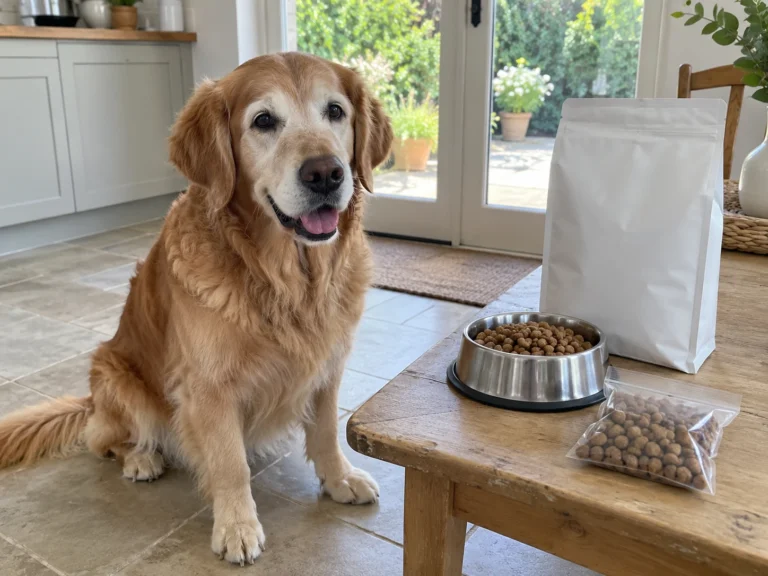
Senior Dog Dry Food Formula
A qualitative senior-dog formula reference connecting ingredient and nutrition questions to a specific product-development brief.
Explore this directionOEM & private label · Product direction
A senior-dog dry food development direction for brands and importers planning a distinct range extension. Review the intended population, nutritional role, ingredient and flavour preferences, kibble, samples and pack formats before approving a commercial specification.
Develop this direction around your target market, pack size and brand positioning. Final specifications and order terms are confirmed for your project.
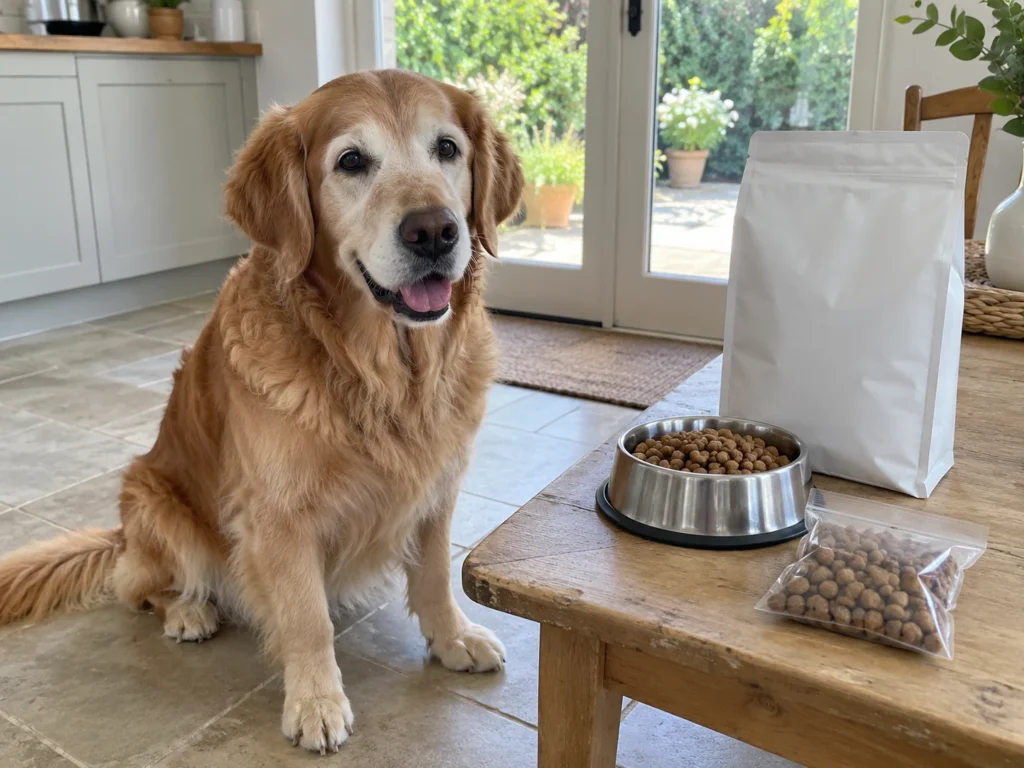
Your project requirements
Start with the intended senior-dog population, dog-size scope and sales channel. Explain the age positioning your brand intends to use, the existing adult product being compared and the reason customers would choose the new SKU. A senior product name is a positioning input, while the applicable nutrition basis, feeding information and final specification need their own review. Identify small, medium or large dog-size requirements separately. The proposed physical format, activity context and feeding information should be reviewed for that scope rather than assuming one specification fits every senior dog.
Your project requirements
Build a separate senior-dog brief with the linked Formula reference. List preferred ingredient sources and exclusions, flavour, analytical information and any retailer or destination requirements. Review the proposed ingredient declaration and finished-product specification together; a senior label does not establish one universal recipe or nutrient adjustment. Identify small, medium or large dog-size requirements separately. The proposed physical format, activity context and feeding information should be reviewed for that scope rather than assuming one specification fits every senior dog. Exact ingredient inclusion and nutrient values are confirmed for the selected product before artwork and production approval.
Your project requirements
Agree a written sample protocol and identify the comparison product before development. Review kibble size, shape, appearance, odour, consistency and handling, and define any feeding-acceptance evaluation separately. Compare the proposed kibble against the intended dog-size scope. If several sizes are planned, identify each sample and the required differences instead of treating them as one accepted format. Record the sample ID, specification version, accepted characteristics and unresolved questions. Confirm sample quantity, charges, timing and delivery arrangements for the project.
Your project requirements
Agree the order-specific acceptance limits and documents with the approved product and packaging versions. The owner-confirmed QC workflow includes raw-material inspection, weighing and mixing control, forming checks, drying and moisture control, coating uniformity, packaging weight checks, finished-product testing, retained samples and batch traceability. Identify the required test items and reporting basis, and agree how a proposed ingredient, process or pack change will be reviewed. Keep the accepted sample reference available for the first delivery and repeat orders.
| Ingredient direction | Role in the brief | Notes |
|---|---|---|
| Declared ingredient specification | Identify the preferred raw-material sources, exclusions and any allowed alternatives before reviewing the proposed formula. Connect ingredient declarations to the specifications and documents needed for the selected product. | Development requirements are reviewed for the project; no fixed ingredient percentage is assigned here. |
| Shape | Project notes |
|---|---|
| Senior-dog physical-format brief | Discuss the proposed size, shape and texture against the intended population and an identified benchmark. Agree the inspection or evaluation method and accepted characteristics before the sample becomes the production reference. Small, medium or large kibble directions can be discussed for the intended dog-size scope. |
| Direction | Discussion points |
|---|---|
| Chicken | A flavour direction for development and sample discussion. Confirm the declared ingredient list, any exclusions, sourcing specification and label wording for the selected product; a flavour name alone is not the full formula. |
| Beef, lamb or fish | A flavour direction for development and sample discussion. Confirm the declared ingredient list, any exclusions, sourcing specification and label wording for the selected product; a flavour name alone is not the full formula. |
| Format | Planning notes |
|---|---|
| Retail pack | Discuss the 1 to 3 kg direction against the channel, purchase cycle and estimated quantity per SKU. Confirm the actual material, closure, fill, artwork, label language, handling and shelf-life support for the selected product-and-pack combination. |
| Family pack | Discuss the 5 to 8 kg direction against the channel, purchase cycle and estimated quantity per SKU. Confirm the actual material, closure, fill, artwork, label language, handling and shelf-life support for the selected product-and-pack combination. |
| Bulk bag | Discuss the 10 to 20 kg direction against the channel, purchase cycle and estimated quantity per SKU. Confirm the actual material, closure, fill, artwork, label language, handling and shelf-life support for the selected product-and-pack combination. |
Connected reference
Use the reference to structure your development brief. It does not disclose a commercial recipe or guarantee a finished specification.
Define the intended population and brand age positioning, then review the actual nutritional role, final specification and feeding information for the market. Identify small, medium or large dog-size requirements separately. The proposed physical format, activity context and feeding information should be reviewed for that scope rather than assuming one specification fits every senior dog.
This is a general senior dry-food development direction. A diagnosed-condition or veterinary dietary-management brief needs a separate suitability, formulation and evidence review and is not established by the senior product name.
Send destination, channel, intended population, ingredient and flavour preferences, kibble requirements, pack sizes, artwork status and estimated quantity per SKU. Identify required documents and the questions still open. Product and packaging minimums, price, sample terms and schedule are confirmed for that combination.
Yes, they can be discussed as separate product briefs. Define the meaningful differences, pack versions and estimated quantities for each. Connect the approved sample, specification and artwork versions to every SKU and review proposed changes before repeat orders.
Start with your requirements
Share your destination country, product direction, intended pack sizes and estimated quantity per SKU. Mention the questions you need to resolve first, and we will review the brief with you.
Your contact at ZoePetSup
Tell me which pet food project you are planning and what you need to confirm first. A rough brief helps us identify the next questions together.
Plan your next step
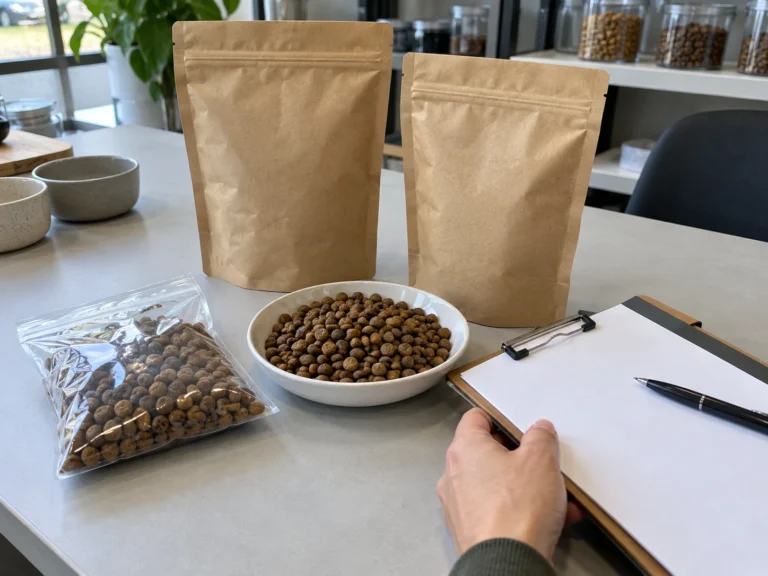
Plan a private label dry dog food range with product, sample, packaging and order requirements. Review adult and puppy directions with ZoePetSup.
Explore this directionPlan custom dry dog food around life stage, breed size, formula direction, packaging and sample review. Discuss a focused product range with ZoePetSup.
Explore this direction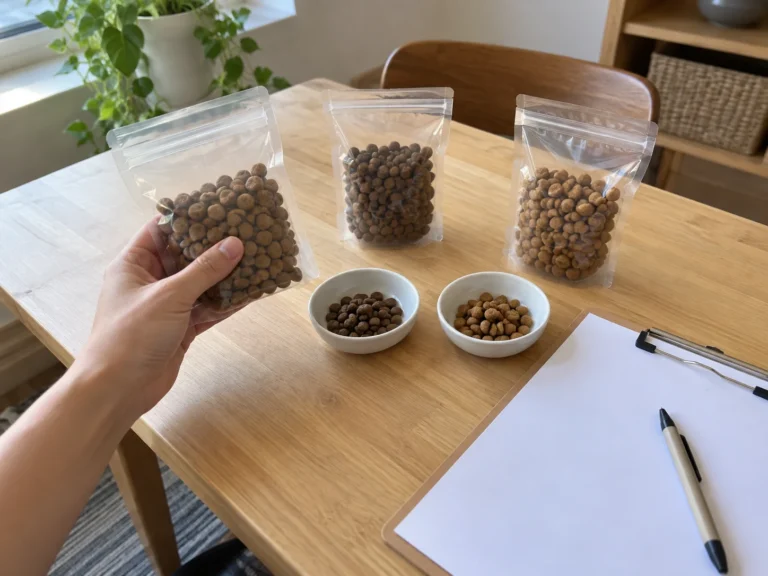
Plan OEM pet food samples with a clear brief, review criteria, revision feedback and approval handoff. Discuss your cat or dog food project with ZoePetSup.
Explore this direction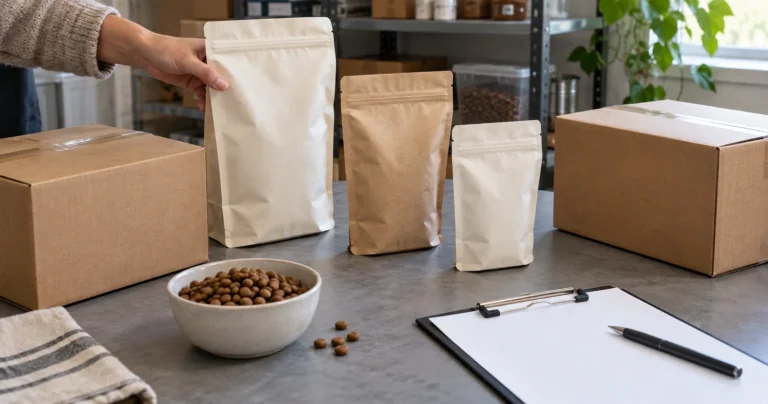
Understand pet food MOQ by product, packaging and SKU mix. Prepare a practical first order brief and confirm project-specific quantities with ZoePetSup.
Explore this directionPrepare a pet food OEM quotation brief by formula, SKU, packaging and delivery scope. Compare clear cost inclusions and request a project review with ZoePetSup.
Explore this direction