Dry cat food · OEM & private label
Skin & Coat Cat Food OEM
Add a skin-and-coat cat food SKU with a clear ingredient brief, storage and packaging requirements, and evidence supporting the wording on the pack.
For a brand or importer, a skin-and-coat position needs to translate into a product specification buyers can compare and reorder. ZoePetSup can discuss this cat-food development direction alongside flavour, kibble, packaging and sample requirements. Final ingredient choices, nutrient values, label statements and commercial terms are confirmed for the project.
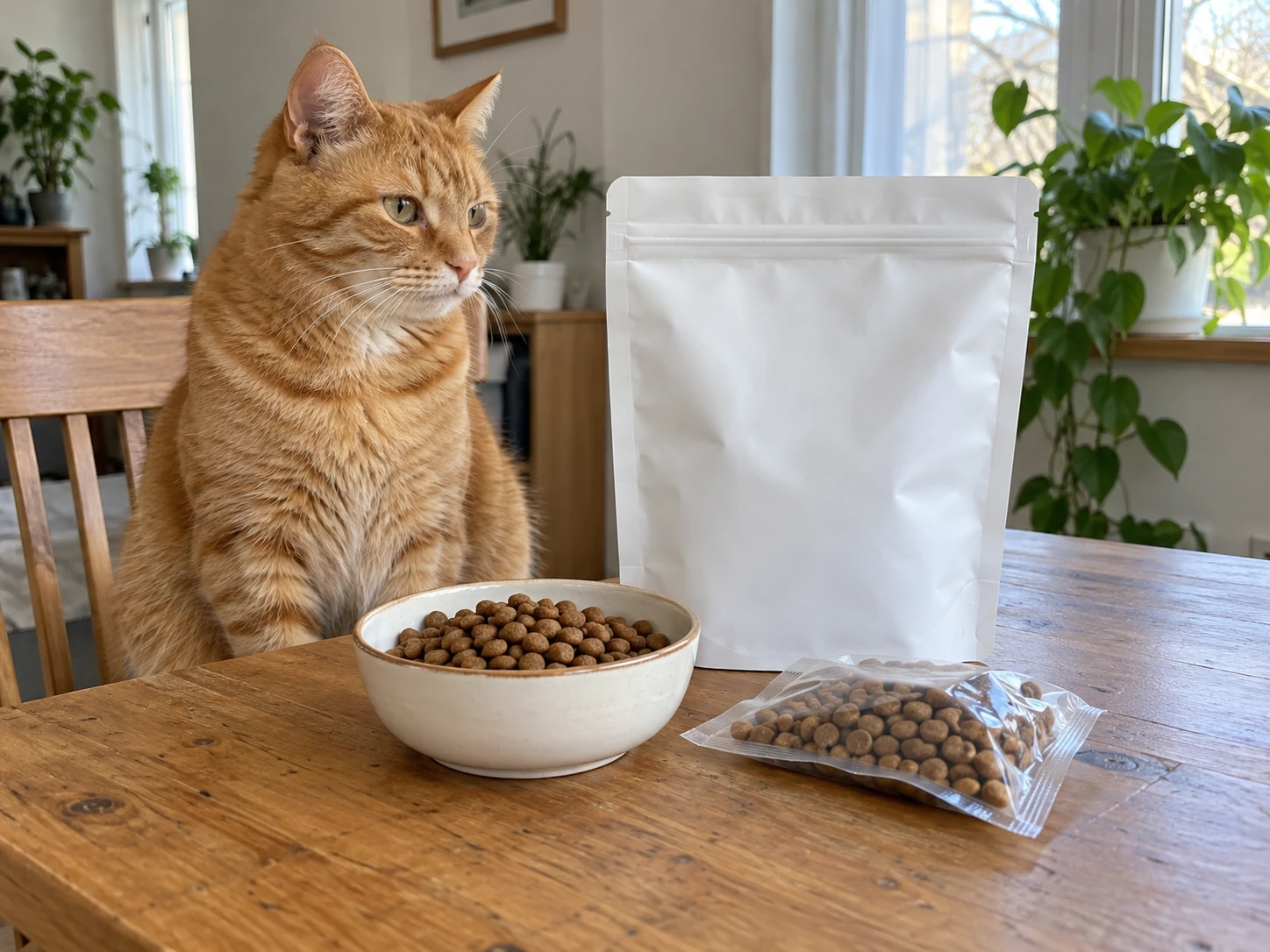
Connect the market, product direction and pack plan before approving the order.
Your sourcing decisions
Explore this project
01 · Your product brief
Define the skin-and-coat product positioning
Start with the intended cat population, feeding role and sales channel. A clear place in the range helps buyers understand why this product is a separate SKU.
Describe the intended life stage, brand tier, current adult-cat product and the customer question your new SKU should answer. Decide whether skin-and-coat positioning is the main proposition or a supporting feature of a broader daily-food product. Review the proposed name and statements before committing to pack artwork.
Brand range
Explain the difference from your regular adult-cat, indoor or hairball product, including how customers will compare them.
Intended buyer
List the destination, retail or online channel, expected pack sizes and information retailers require.
Product statements
Provide the exact proposed wording so the specification and evidence needs can be reviewed together.
02 · Your product brief
Review protein and fat ingredient directions
Review the identity and specification of protein and fat ingredients within the whole formula. A named ingredient is only one part of the product brief.
Discuss the preferred ingredient and flavour directions together with sourcing consistency, declaration requirements and any brand exclusions. Chicken, fish, tuna, salmon or seafood flavour directions can be considered for cat-food projects. Final material selection and inclusion are reviewed for the agreed formulation.
| Discussion area | Buyer input | What to confirm |
|---|---|---|
| Protein ingredient direction | Preferred declared sources and any exclusions | Ingredient identity, specification and feasibility for the product |
| Fat-source direction | The proposed product position and information needed for label review | Material specification, finished-product indicators and storage considerations |
| Flavour and acceptance | Benchmark, preferred direction and sample questions | Sample comparison method and accepted characteristics |
| Nutrition and wording | Intended feeding role and proposed pack statements | Applicable nutrition basis, final values and supporting documents |
03 · Your product brief
Connect the formula to storage and packaging
Connect the formula brief to the selected pack and intended distribution conditions before approving a shelf-life statement.
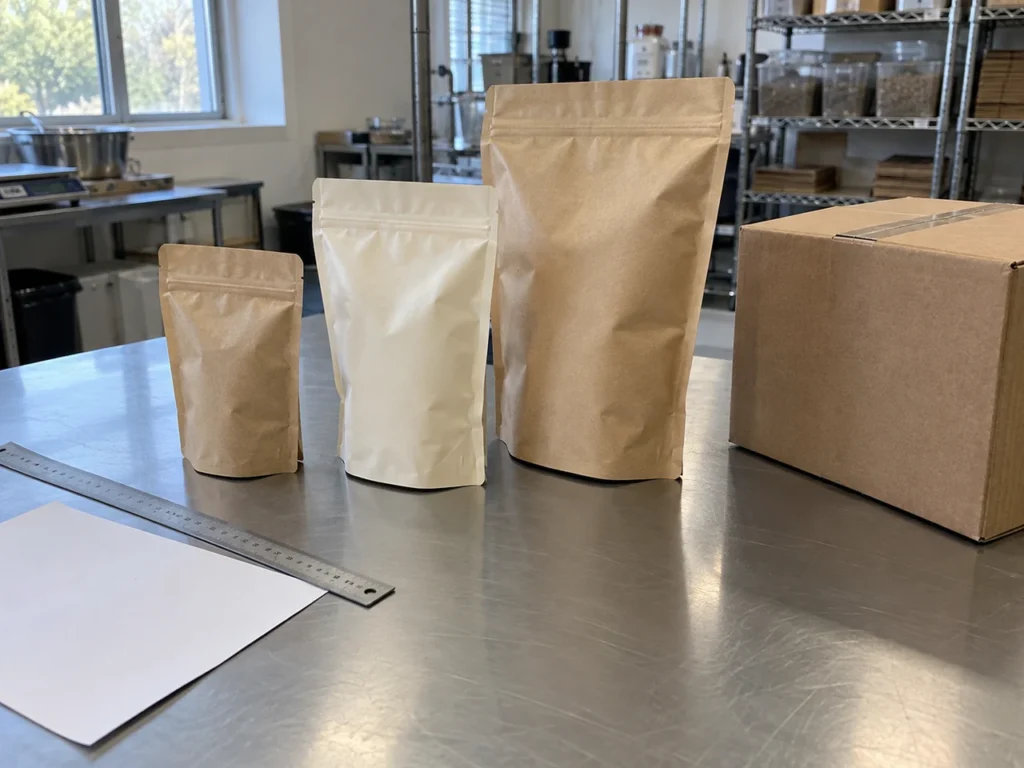
Discuss the actual packaging material, closure, fill, pack weight and handling conditions. Ask which shelf-life and stability information supports the selected product-and-pack combination, and which additional work may be needed. A sample photo, packaging description or generic shelf-life statement cannot replace that review.
Cat-food pack directions include 400 g–2 kg retail, 3–5 kg family and 10–20 kg bulk formats. Confirm the final construction, printing, label language and carton needs for your route to market. Keep artwork approval connected to the agreed product specification.
Move the brief forward
Bring the open questions to your project review
Share the destination, product benchmark, pack sizes and estimated quantities you have confirmed so far.
04 · Your product brief
Keep product wording within the evidence
Keep support-oriented wording tied to the actual finished product and available evidence. Broad ingredient associations do not establish a product outcome.
Review the proposed name, front-of-pack statements, website copy and any comparison claims together. Identify the documents or evaluation information required for the intended destination and channel. A general skin-and-coat concept should not imply treatment of a diagnosed condition or an unverified before-and-after result.
Specification support
Agree the required ingredient declarations, analytical indicators and reporting basis for the selected product.
Statement support
Identify the evidence needed for each proposed statement and remove language that extends beyond its scope.
Version control
Link the approved wording and artwork to the final formula, packaging and relevant document versions.
05 · Your product brief
Approve samples and batch acceptance criteria
Approve a sample benchmark and written acceptance criteria that can be used again when the commercial order arrives.
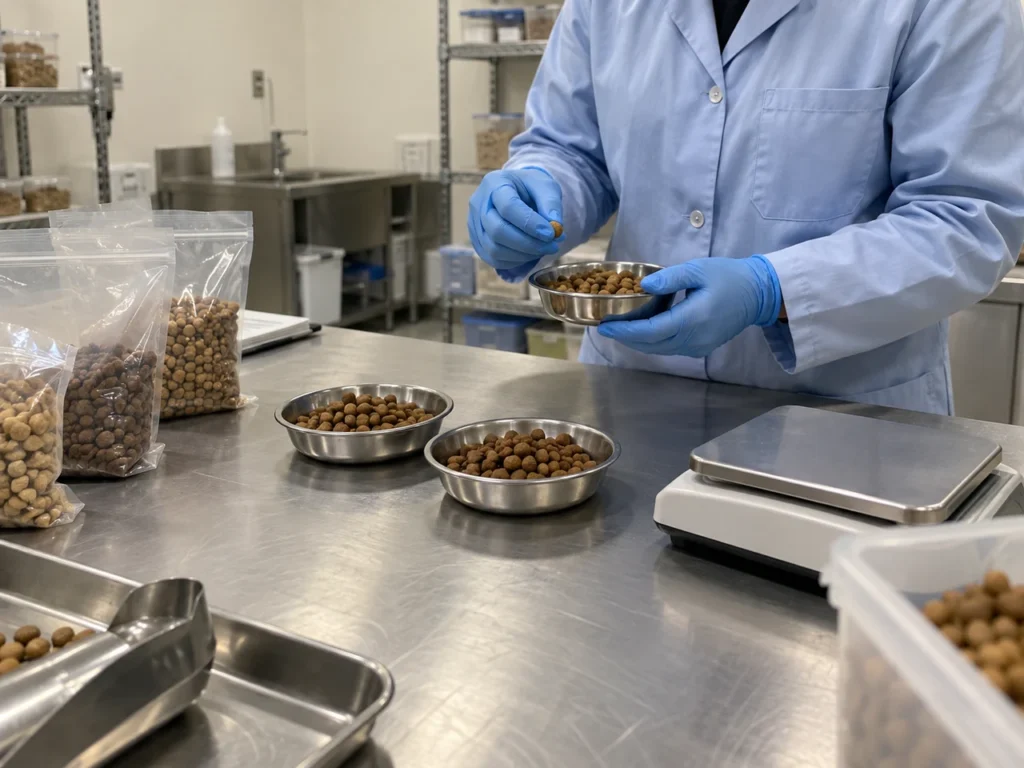
Define the sample review before development: physical format, appearance, odour, consistency, handling and any agreed acceptance evaluation. Confirm which finished-product test information and batch records are required for the order. The owner-confirmed QC workflow includes raw-material checks, mixing, forming, moisture and coating control, packaging weight checks, retained samples and traceability.
Identify the sample
Record the sample ID, product specification and pack direction being reviewed.
Record the acceptance
Document accepted characteristics, agreed limits and any additional evaluation or test information required.
Connect to production
Confirm which approved versions the order follows and how proposed ingredient, process or artwork changes are reviewed.
06 · Your product brief
Add the SKU to your brand range
Launch the SKU with a defined pack and quantity plan, then keep repeat orders connected to the same approved reference.
Send the destination, channel, intended product position, ingredient and flavour preferences, kibble brief, packaging, artwork status and quantity per SKU. Product and packaging minimums, sample terms, price, lead time and shelf-life support are confirmed for that combination. If several cat-food directions are planned, identify their differences and estimated order quantities separately.
Can we combine skin-and-coat and indoor positioning?
The combined concept can be discussed. Review the intended product role, specification and evidence for each proposed statement, then decide whether the combined SKU is clear for your buyers.
Does the Formula reference provide a fixed skin-and-coat recipe?
It structures the development discussion. Ingredient selection, final nutrient values and label support are confirmed for your selected product.
Can the pack be changed on a repeat order?
Discuss the new format before ordering. Material, fill, artwork, shelf-life support and packaging minimums may need a renewed review.
Connected procurement decisions
Continue planning your range
Dry cat food manufacturing
Explore this decision →Adult cat dry food reference
Explore this decision →Adult cat formula direction
Explore this decision →Plan a private label cat food range
Explore this decision →Discuss custom cat food development
Explore this decision →Plan your OEM food samples
Explore this decision →Review order minimums
Explore this decision →Prepare a useful quotation brief
Explore this decision →Start with your requirements
Tell Arlo about your skin & coat cat food project
Share your destination market, intended product position, ingredient and kibble preferences, pack sizes and estimated quantity per SKU. Identify the questions you want to resolve first.
Your contact at ZoePetSup
Hi, I’m Arlo.
Send the requirements you have confirmed and the questions still open. We can review the product, sample and packaging brief together.
- Destination market and sales channel
- Life stage, product and flavour direction
- Pack sizes and quantity per SKU
- Artwork status and target launch window