Dry cat food · OEM & private label
Hairball Control Cat Food OEM
Plan a hairball-focused dry cat food SKU with a defined food format, ingredient specification, sample protocol and evidence for the proposed label wording.
Brands and importers often compare a daily dry food with a separate hairball-support supplement. Start by choosing the role of the product, then review the formulation and commercial brief for that role. ZoePetSup can discuss a hairball-control cat-food development direction; final specifications, claims, packaging and order terms are reviewed for the project.
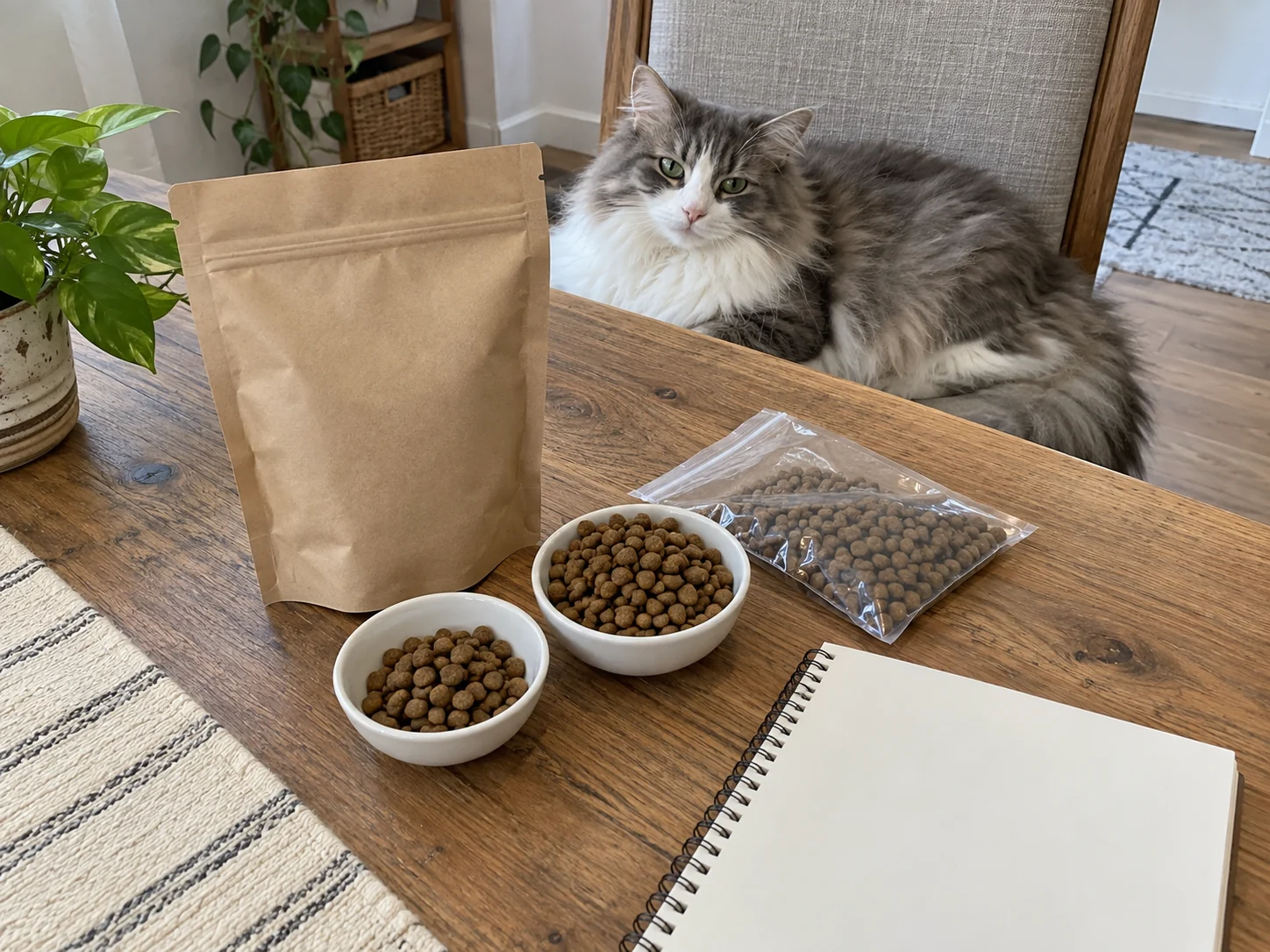
Connect the market, product direction and pack plan before approving the order.
Your sourcing decisions
Explore this project
01 · Your product brief
Choose between a daily food and a supplement
Choose the product category first. A dry cat food and a soft-chew supplement have different feeding roles, serving instructions and purchasing comparisons.
Identify whether your customers want a complete daily-food position or a supplementary format alongside their current food. Review the intended life stage and destination-market requirements with the selected category. Keep the food and supplement briefs separate so that specifications, evaluation methods and artwork are reviewed on the correct basis.
Daily dry food
Discuss the food's intended nutritional role, feeding information, kibble and pack size as one product specification.
Supplementary format
If you need a separate soft chew, use the cat hairball-support reference as a different product discussion, with its own composition and serving review.
Range architecture
Explain where the SKU sits beside your adult-cat and indoor-cat products, so the reason for a separate pack is clear.
02 · Your product brief
Define the hairball product brief
Turn the proposed positioning into questions that can be answered during development and sample review.
A competitor pack can explain the market context, but its ingredient list or marketing statements do not establish the specification your product should use. Send the benchmark together with the characteristics you want to compare and the changes that matter to your brand.
| Brief item | Buyer input | Project confirmation |
|---|---|---|
| Product role | Daily food, intended life stage and channel | Applicable nutrition basis and feeding information |
| Ingredient priorities | Preferred sources, exclusions and fibre questions | Declared ingredients, sourcing specifications and formulation feasibility |
| Proposed wording | The exact statements planned for the pack | Required evidence and destination-market label review |
| Commercial scope | Pack sizes and estimated quantity per SKU | Sample terms, product and packaging minimums, and quotation basis |
03 · Your product brief
Review ingredient directions with the specification
Review fibre and other ingredient directions as part of the whole product specification. An ingredient name alone does not establish hairball-related performance.
Ask which ingredient specifications and supplier documents are needed for the proposed formulation. Confirm the declared source, consistency requirements, traceability information and any change-control questions your brand needs answered. Chicken, fish, tuna, salmon or seafood flavour directions can be discussed against the brief.
Use the linked adult-cat Formula to organise the development questions, rather than treating it as an already validated hairball recipe. Final ingredient inclusion, analytical targets and supporting evidence are confirmed for the selected product and proposed statements.
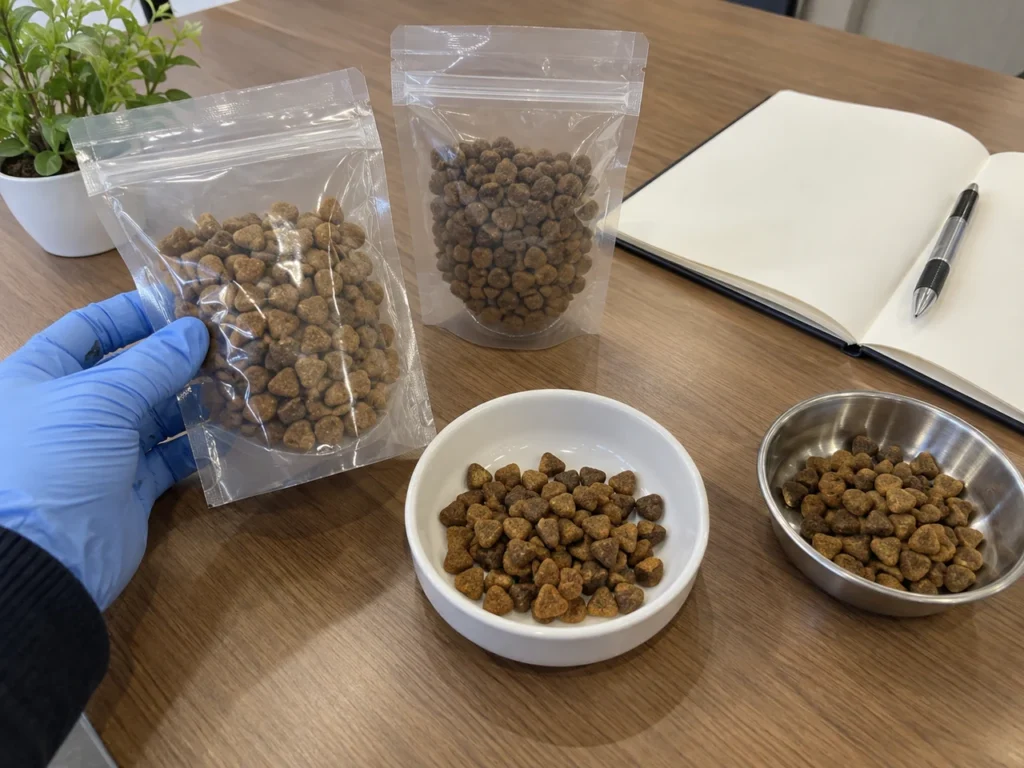
Move the brief forward
Bring the open questions to your project review
Share the destination, product benchmark, pack sizes and estimated quantities you have confirmed so far.
04 · Your product brief
Agree how the sample will be evaluated
Decide what the sample must demonstrate before you request it. Separate ordinary physical acceptance from any performance evaluation.
Keep sample IDs, the specification version and the review conditions together. If a feeding evaluation or claim-support study is required, agree the protocol, responsibility, observations and report needs before treating it as evidence. A casual feeding observation cannot answer every question about a hairball-positioned product.
Physical acceptance
Compare kibble shape, size, odour, appearance, consistency and handling against the agreed benchmark.
Evaluation scope
Define the population, method and outputs needed for the question being evaluated; request the evidence appropriate to the proposed wording.
Order reference
Identify the accepted sample and written limits that production will follow, including how a proposed ingredient or process change is reviewed.
05 · Your product brief
Keep label wording tied to supporting evidence
Draft the proposed pack statements early, then review them with the formula, intended product category and supporting documents.
Keep the language specific enough to be assessed. Avoid expanding a support-oriented product concept into disease-treatment language or an unverified numerical promise. Destination-market requirements and the evidence available for the actual finished product determine which statements can be retained.
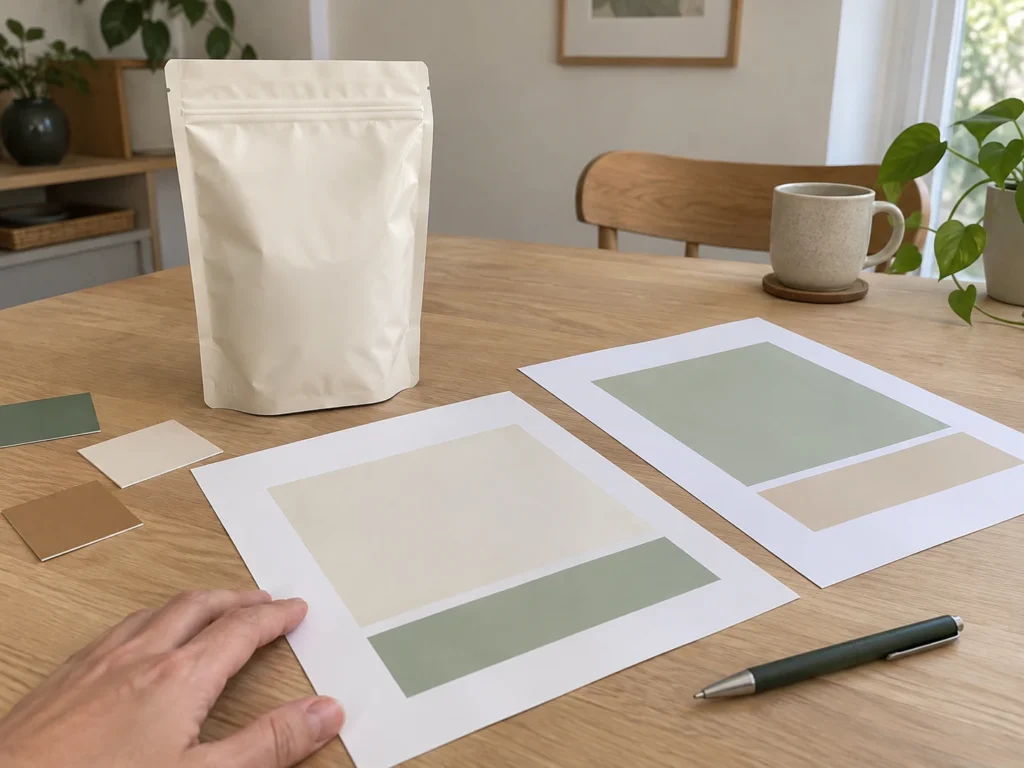
List the statements
Provide front-of-pack wording, product name, website claims and any symbols or comparisons planned for the artwork.
Check the support
Review the approved specification, ingredient documentation, required test information and any relevant evaluation report together.
Approve the artwork
Keep the signed-off label version connected to the final formula and packaging specification for production and repeat orders.
06 · Your product brief
Plan the first SKU and its packaging
Start with a defined SKU and a realistic pack plan. Several near-identical hairball products can complicate the first order without making the range easier to buy.
Discuss 400 g–2 kg retail packs, 3–5 kg family packs or 10–20 kg bulk directions as appropriate to the channel. Final pack construction and fill, shelf-life support, product MOQ, packaging minimums and schedule are confirmed for the project. Send the destination, channel, flavour preferences, proposed claims, artwork status and quantity per SKU for a useful quotation review.
Can you discuss both hairball food and a soft chew?
Yes. Treat them as separate product briefs with their own feeding role, specification, evaluation and label review. The related cat soft-chew reference provides an additional starting point.
Is the linked adult-cat formula already a finished hairball recipe?
It is a development reference. The hairball-focused brief and proposed statements require their own specification and evidence review.
Are sample cost and MOQ fixed across pack sizes?
They are confirmed for the selected formulation, pack and order mix. List each proposed SKU and quantity rather than assuming one minimum covers the entire range.
Connected procurement decisions
Continue planning your range
Dry cat food manufacturing
Explore this decision →Adult cat dry food reference
Explore this decision →Adult cat formula direction
Explore this decision →Plan a private label cat food range
Explore this decision →Discuss custom cat food development
Explore this decision →Plan your OEM food samples
Explore this decision →Review order minimums
Explore this decision →Prepare a useful quotation brief
Explore this decision →Compare the separate hairball-support soft-chew format
Explore this decision →Start with your requirements
Tell Arlo about your hairball control cat food project
Share your destination market, intended product position, ingredient and kibble preferences, pack sizes and estimated quantity per SKU. Identify the questions you want to resolve first.
Your contact at ZoePetSup
Hi, I’m Arlo.
Send the requirements you have confirmed and the questions still open. We can review the product, sample and packaging brief together.
- Destination market and sales channel
- Life stage, product and flavour direction
- Pack sizes and quantity per SKU
- Artwork status and target launch window