Dry cat food · OEM & private label
Indoor Cat Food OEM & Private Label
Build an indoor-cat dry food line around your sales channel, intended feeding context and an agreed product specification.
For pet brands, importers and distributors, the useful first decision is what the indoor SKU adds to your range. ZoePetSup can discuss an indoor-cat development direction, ingredient and flavour preferences, kibble, packaging and sample review. The final formula, label wording and commercial terms are agreed for the project.
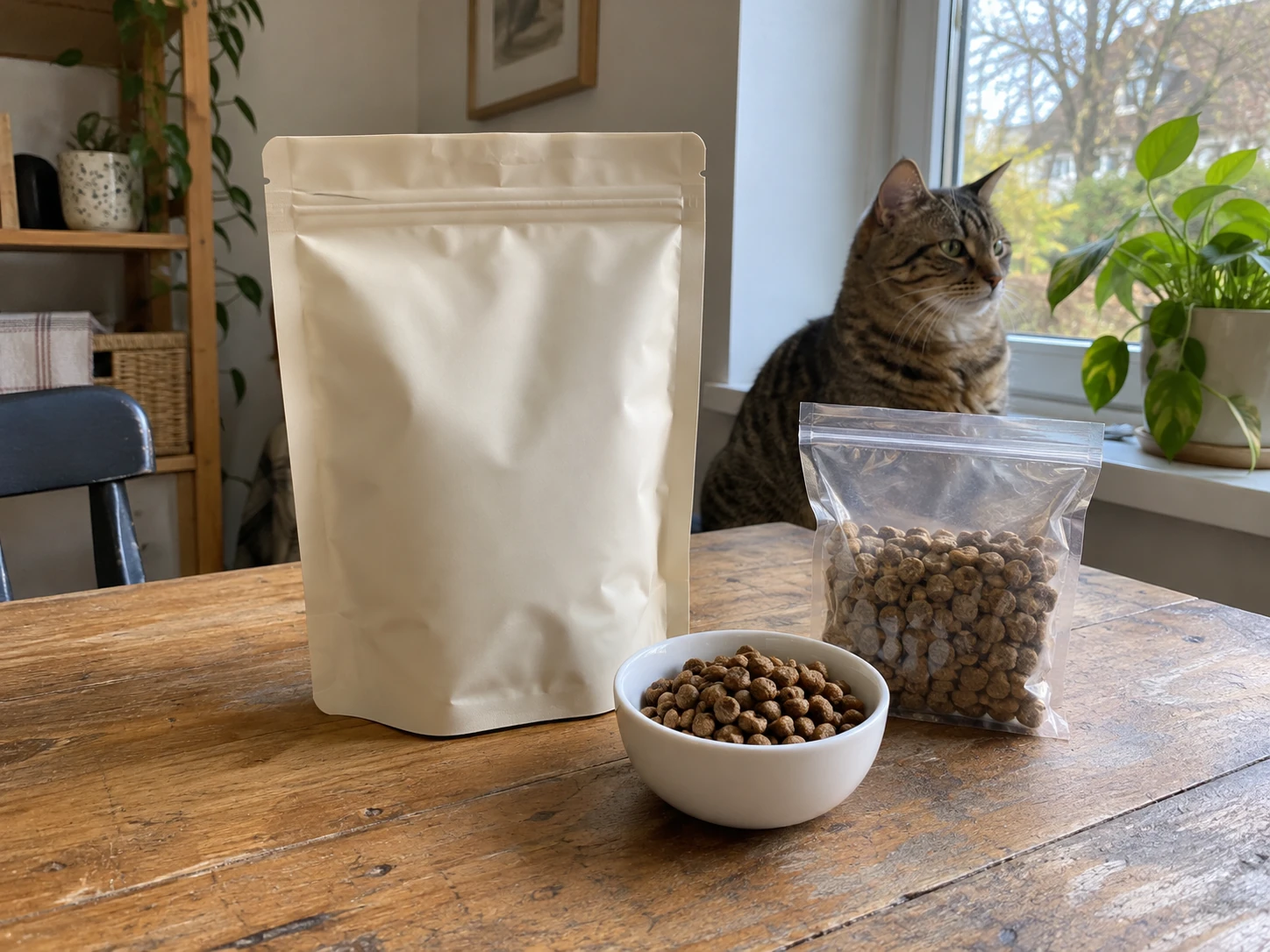
Connect the market, product direction and pack plan before approving the order.
Your sourcing decisions
Explore this project
01 · Your product brief
Define the indoor-cat product you want to sell
Describe the intended cat population and sales channel before selecting a formula reference. Indoor living is a positioning input; it does not define a complete nutrition specification.
State the intended life stage, market, brand tier and feeding context. A supermarket range, specialist pet shop and online subscription may need different pack sizes and product explanations. Identify the reason a buyer would choose this SKU alongside your existing adult-cat food.
Range extension
Explain the gap in your current cat-food range and the comparison shoppers will make with the adult maintenance SKU.
Channel requirements
List retailer or distributor requirements, label languages and the pack sizes that can be handled in your sales channel.
Project brief
Share destination, intended life stage, target positioning and estimated quantity for each pack size. Mark requirements that are still open.
02 · Your product brief
Choose a clear place in your range
Give the indoor SKU one main role. Additional directions can be discussed, but the pack should not promise several unsupported effects.
Compare the proposed SKU with nearby directions before committing to separate products. A focused launch can be easier to explain and replenish than several near-identical packs. The table below is a brief-building guide; it does not establish nutrient targets or finished-product performance.
| Direction | Buyer decision | What to confirm |
|---|---|---|
| Indoor adult cat | A daily-food position for the intended indoor-cat market | Nutrition basis, energy information, feeding guidance and permitted wording |
| Hairball-focused cat food | Whether hairball positioning deserves its own SKU | Ingredient specifications, evaluation approach and support for the proposed statements |
| Skin and coat direction | How the SKU fits the brand's existing range | Ingredient declaration, storage considerations and evidence supporting the product wording |
03 · Your product brief
Build the formula brief around the positioning
Use the adult-cat Product and Formula as development references, then record what the indoor brief needs to change or retain.
Discuss chicken, fish, tuna, salmon or seafood flavour directions alongside ingredient preferences and exclusions. Ask how the proposed ingredient list, finished-product specification and feeding information will be reviewed together. A flavour name is not a substitute for a declared ingredient specification.
Keep the agreed specification separate from marketing shorthand. Record the required nutrient indicators, their reporting basis and the documents your destination or customer requires. Exact recipe ratios and final analytical values are confirmed during the project review.
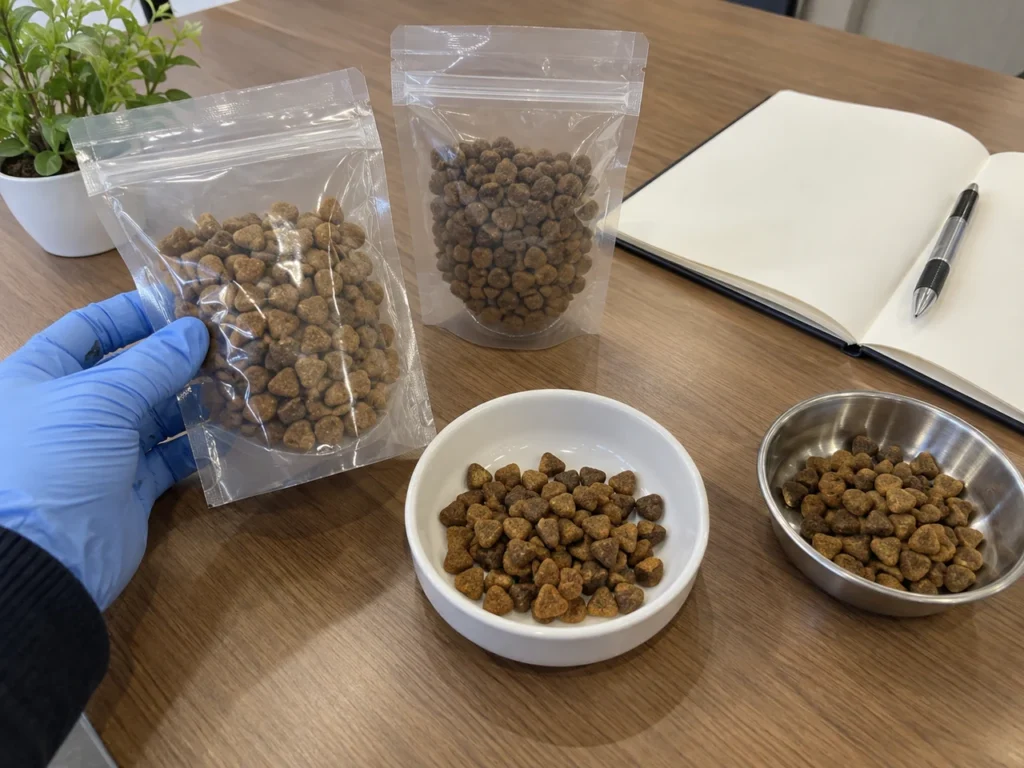
Move the brief forward
Bring the open questions to your project review
Share the destination, product benchmark, pack sizes and estimated quantities you have confirmed so far.
04 · Your product brief
Compare kibble and palatability samples
Agree the comparison method before requesting samples, so each review produces a decision that can be carried into the order.
Sample charges, sample quantity, development timing and delivery arrangements are project-specific. Send an existing benchmark if you want to explain a particular shape, texture or product expectation.
Physical comparison
Review the proposed size, shape, appearance, odour, consistency and handling. Keep an identified sample and written acceptance notes.
Acceptance review
If a feeding or palatability evaluation is needed, define the protocol, observations and responsibility with your team. One informal feeding observation does not establish a general product claim.
Production reference
Confirm which sample and specification version production will follow, what may vary within agreed limits and how a proposed change will be approved.
05 · Your product brief
Prepare the pack and label for your channel
Choose the pack around the intended buying cycle and distribution conditions, then review the artwork against the approved product specification.
Cat-food pack directions include 400 g–2 kg retail packs, 3–5 kg family packs and 10–20 kg bulk bags. The exact pack, material, fill and order requirements need confirmation for the selected product. Review shelf-life evidence with the actual formula, packaging and intended storage conditions.
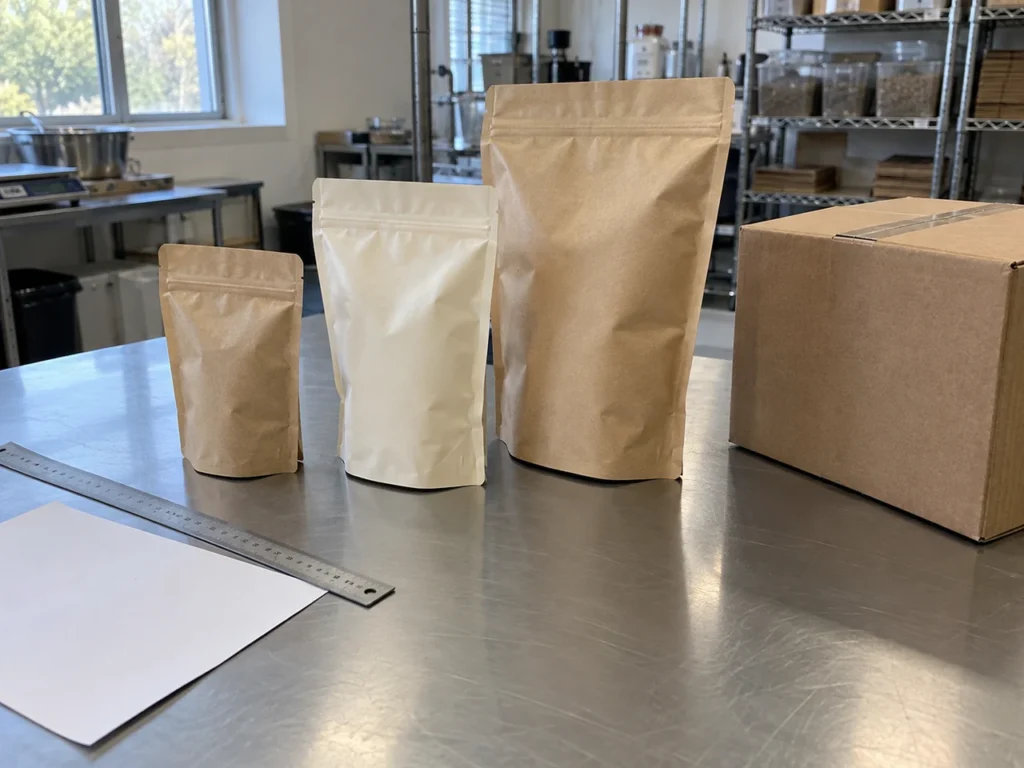
Confirm the pack brief
List pack weights, material requirements, closure, language, carton and handling needs for each SKU.
Check the artwork
Align ingredient declaration, feeding information, intended life stage and proposed statements with the approved specification and destination review.
Approve the version
Record the final artwork, specification and sample references together before production and repeat orders.
06 · Your product brief
Approve a useful sample benchmark
A useful first enquiry connects the product idea to an order plan. You can begin with open questions, provided they are identified clearly.
Send your destination, sales channel, intended cat-food position, flavour and kibble preferences, proposed packs and estimated quantity per SKU. Include artwork status and the decisions you need help resolving. Product MOQ, packaging minimums, quotation basis and schedule are reviewed for this brief.
Can the indoor direction use an existing adult-cat reference?
It can be a starting point for discussion. Review the indoor positioning, nutrition specification, sample criteria and label together before treating it as the approved product.
Does indoor positioning establish weight-management performance?
No. Agree the actual product specification and evidence required for any proposed statement. The indoor label alone does not establish a measurable outcome.
Can indoor and hairball directions launch together?
Yes, they can be discussed as separate briefs. List pack sizes and estimated quantities for each, and review whether the differences are meaningful for your buyers.
Connected procurement decisions
Continue planning your range
Dry cat food manufacturing
Explore this decision →Adult cat dry food reference
Explore this decision →Adult cat formula direction
Explore this decision →Plan a private label cat food range
Explore this decision →Discuss custom cat food development
Explore this decision →Plan your OEM food samples
Explore this decision →Review order minimums
Explore this decision →Prepare a useful quotation brief
Explore this decision →Start with your requirements
Tell Arlo about your indoor cat food project
Share your destination market, intended product position, ingredient and kibble preferences, pack sizes and estimated quantity per SKU. Identify the questions you want to resolve first.
Your contact at ZoePetSup
Hi, I’m Arlo.
Send the requirements you have confirmed and the questions still open. We can review the product, sample and packaging brief together.
- Destination market and sales channel
- Life stage, product and flavour direction
- Pack sizes and quantity per SKU
- Artwork status and target launch window