Dry cat food · OEM & private label
Sensitive Stomach Cat Food OEM
Develop a sensitive-stomach cat food brief around a traceable ingredient specification, a defined evaluation method and carefully reviewed product wording.
A sensitive-stomach position can mean different things to different buyers. Brands and distributors need to identify the intended daily-food product, the ingredient questions they want to address and the evidence required for the proposed statements. ZoePetSup can discuss sensitive-stomach and digestive-support development directions, with the final formula, label and commercial specification confirmed for the project.
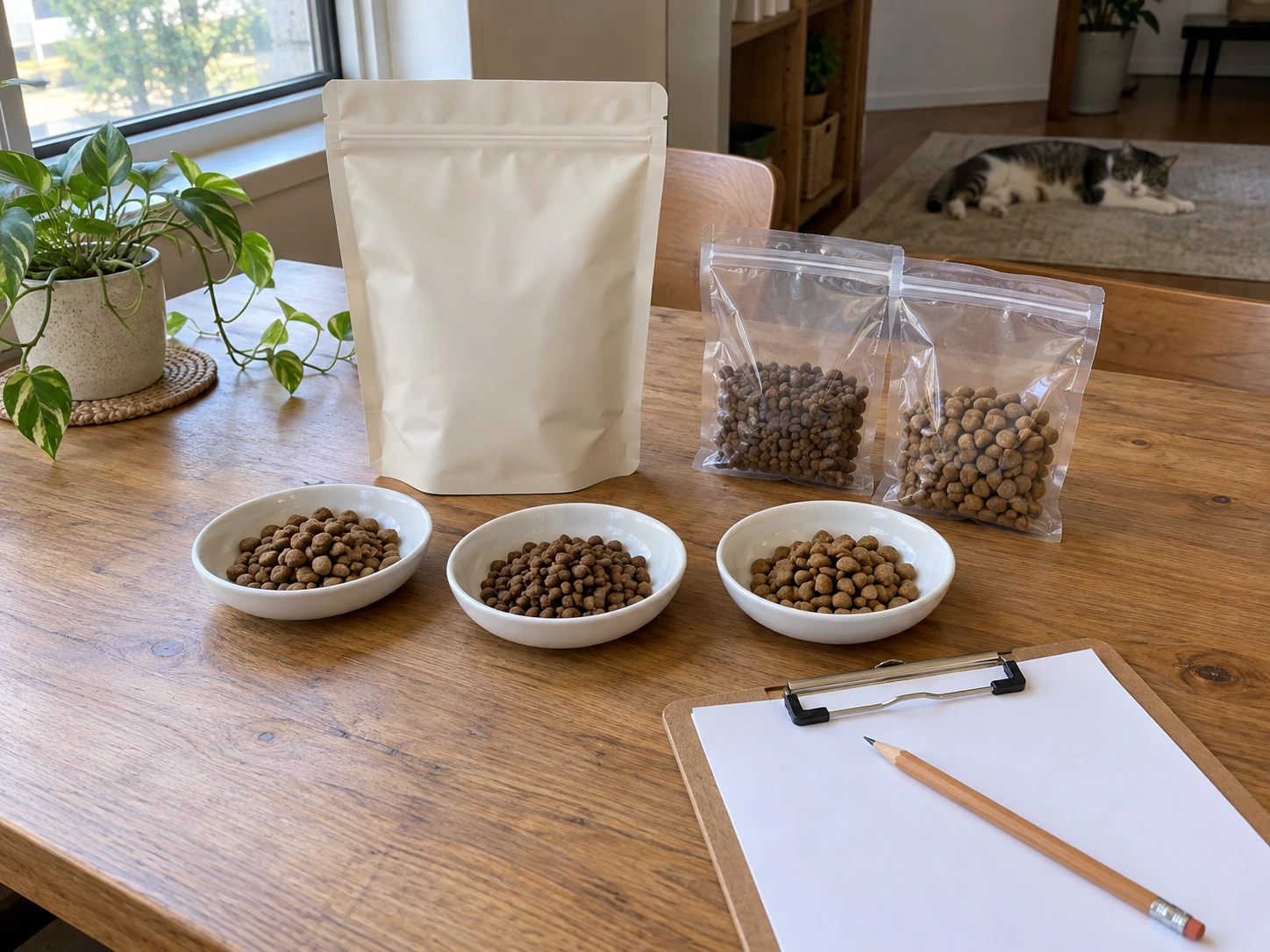
Connect the market, product direction and pack plan before approving the order.
Your sourcing decisions
Explore this project
01 · Your product brief
Define the positioning before changing ingredients
Define the daily-food position and intended life stage before choosing exclusions or changing protein sources.
Send the customer question your brand is trying to answer, the destination market and the existing SKU or benchmark being compared. Separate ordinary product-positioning questions from veterinary dietary-management needs. This development direction does not establish suitability for a diagnosed condition or an ingredient-allergy claim.
A clear customer group
State the intended cat population, life stage and feeding role, together with the retailer or channel requirements.
A defined product difference
Explain how the proposed SKU differs from your regular adult-cat food and what buyers need to understand on the pack.
A reviewable statement
Provide the actual proposed product wording, rather than relying on sensitive or gentle as a complete technical specification.
02 · Your product brief
Make the raw-material specification clear
Ask for ingredient identity, specifications and change control. A short ingredient list does not answer every sourcing or consistency question.
Review the selected raw-material declarations against the proposed formula and supplier documentation. If your brief includes an exclusion, confirm its scope and the production questions that need review. Avoid assuming that one named protein source establishes a validated allergy-management product.
| Specification question | What to define | Why buyers need it |
|---|---|---|
| Ingredient identity | Declared source, material specification and any permitted alternatives | A consistent basis for ingredient statements and supplier review |
| Traceability | Required raw-material and finished-batch references | A clear way to connect accepted samples, production and documents |
| Change control | Which changes require notification or a new approval | Protection against treating a changed product as the same specification |
| Exclusions | The exact exclusion and evidence required | A reviewable requirement instead of an unsupported label shortcut |
03 · Your product brief
Compare the development choices
Compare formulation choices against the whole product brief, including nutritional role, flavour, physical format and cost expectations.
Ingredient preferences can affect sourcing, processing, the finished kibble and the commercial quotation. Identify which requirements are essential and which can be discussed after the first sample review. An existing adult-cat reference can help structure the questions, while the sensitive-stomach positioning needs its own specification review.
Discuss chicken or fish-based flavour directions with the declared ingredient priorities. Keep preferences separate from approved claims: a particular ingredient choice does not by itself establish digestibility, tolerance or a clinical outcome. Agree which analytical indicators and evaluation documents are needed for the final product.
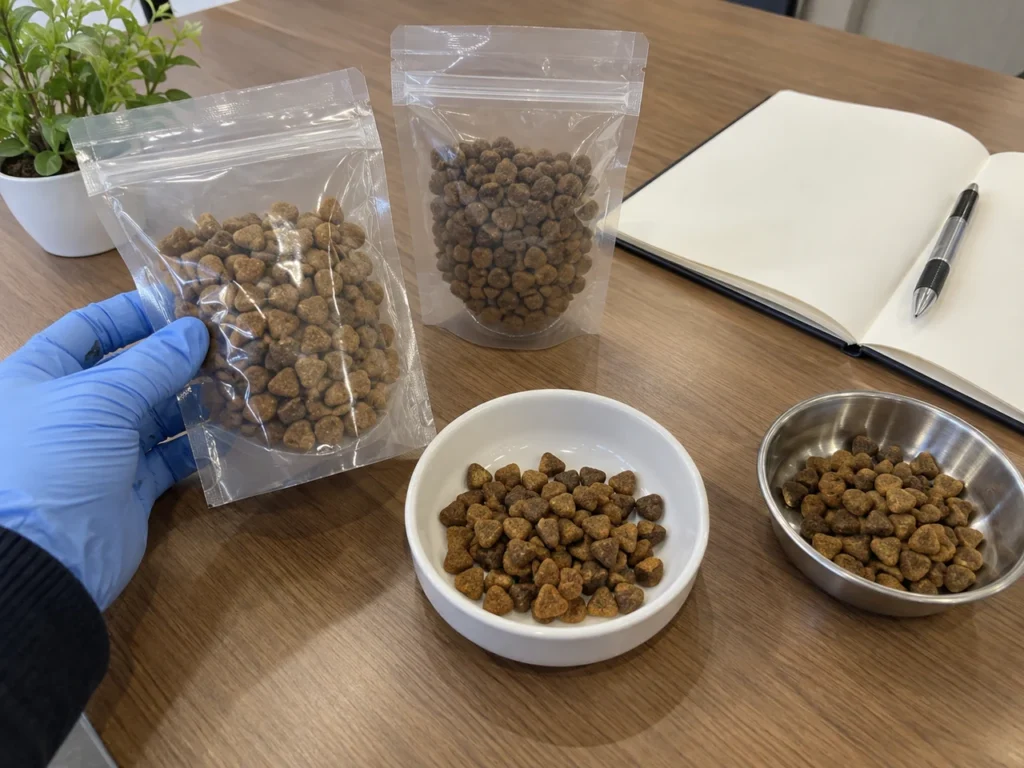
Move the brief forward
Bring the open questions to your project review
Share the destination, product benchmark, pack sizes and estimated quantities you have confirmed so far.
04 · Your product brief
Evaluate samples against an agreed protocol
Use a written sample protocol that matches the question you want to answer. Physical inspection, acceptance observations and digestibility evaluation produce different kinds of evidence.
Record the sample identity, specification version and review conditions. If a feeding evaluation is requested, define its purpose and method before the sample is judged. Confirm who conducts the review, what information is recorded and how the result will affect product approval. Sample charges and timing are agreed for the project.
Physical specification
Check size, shape, odour, appearance, consistency and handling against the proposed production reference.
Evaluation method
Agree the observations or study information needed for the proposed question. Keep the limits of informal acceptance observations clear.
Approval decision
Document accepted characteristics, unresolved questions and any further work needed before the specification is signed off.
05 · Your product brief
Review the label and supporting documents
Connect the label to the approved specification and the evidence available for the actual product.
Review product name, ingredient declaration, feeding information and proposed support statements together. The selected destination market and product category determine the additional documentation or review needed. Do not expand a general digestive-support concept into treatment or unverified allergy language.

Collect the requirements
Provide the intended market, label languages, proposed statements and retailer document requirements.
Review the evidence
Check ingredient specifications, agreed analytical tests, relevant evaluation information and batch-document needs against those statements.
Freeze the artwork
Keep the approved label, formula and sample versions connected, and identify changes that require renewed review.
06 · Your product brief
Move from a brief to an approved first order
An actionable first enquiry combines the product question with a pack and quantity plan.
Share the destination, channel, intended positioning, ingredient preferences or exclusions, flavour, kibble direction and estimated quantity per pack size. Cat-food pack directions include 400 g–2 kg retail, 3–5 kg family and 10–20 kg bulk formats. The selected packaging, product MOQ, sample terms, lead time and shelf-life support are confirmed for the project.
Does a sensitive-stomach brief establish a hypoallergenic product?
No. Ingredient-allergy or dietary-management positioning requires a separate evidence and suitability review. This page describes a general development direction.
Can we compare several ingredient directions?
Yes. List the essential requirements and the alternatives you want reviewed, then agree which specifications and samples should be compared.
What if our brief is still incomplete?
Send the confirmed requirements and identify the open questions. A benchmark pack, ingredient preferences and intended market are useful starting information for a structured discussion.
Connected procurement decisions
Continue planning your range
Dry cat food manufacturing
Explore this decision →Adult cat dry food reference
Explore this decision →Adult cat formula direction
Explore this decision →Plan a private label cat food range
Explore this decision →Discuss custom cat food development
Explore this decision →Plan your OEM food samples
Explore this decision →Review order minimums
Explore this decision →Prepare a useful quotation brief
Explore this decision →Start with your requirements
Tell Arlo about your sensitive stomach cat food project
Share your destination market, intended product position, ingredient and kibble preferences, pack sizes and estimated quantity per SKU. Identify the questions you want to resolve first.
Your contact at ZoePetSup
Hi, I’m Arlo.
Send the requirements you have confirmed and the questions still open. We can review the product, sample and packaging brief together.
- Destination market and sales channel
- Life stage, product and flavour direction
- Pack sizes and quantity per SKU
- Artwork status and target launch window