Nutrition basis and intended population
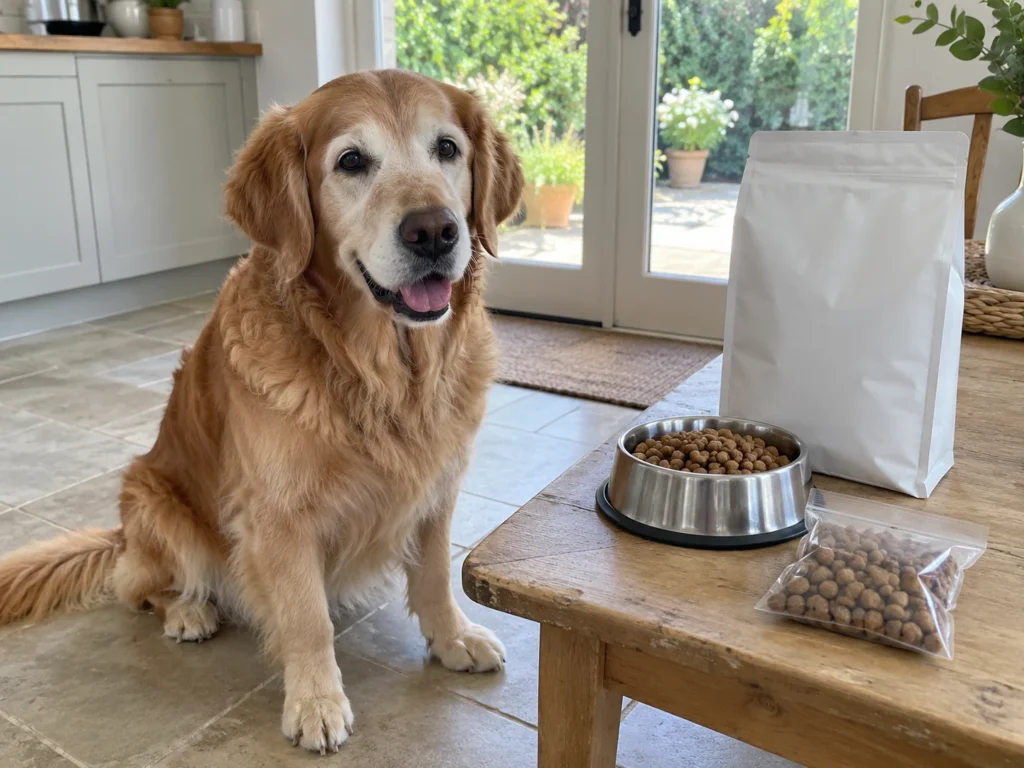
Confirm the applicable nutrition basis for the intended daily-food role and destination market, together with the brand's senior-age positioning and feeding information. Do not assume that the senior name establishes a distinct universal nutrient profile or the same formula adjustment for every dog. Identify small, medium or large dog-size requirements separately. The proposed physical format, activity context and feeding information should be reviewed for that scope rather than assuming one specification fits every senior dog.
Finished-product specification and documents
Identify the nutrient and finished-product indicators required for the selected product. Discuss protein, fat, fibre, ash, moisture and required microbiological items with their reporting basis and test-document needs. Connect the intended dog-size and activity scope to the product information being reviewed, without assigning unconfirmed energy or nutrient values.
Sample evaluation and label support
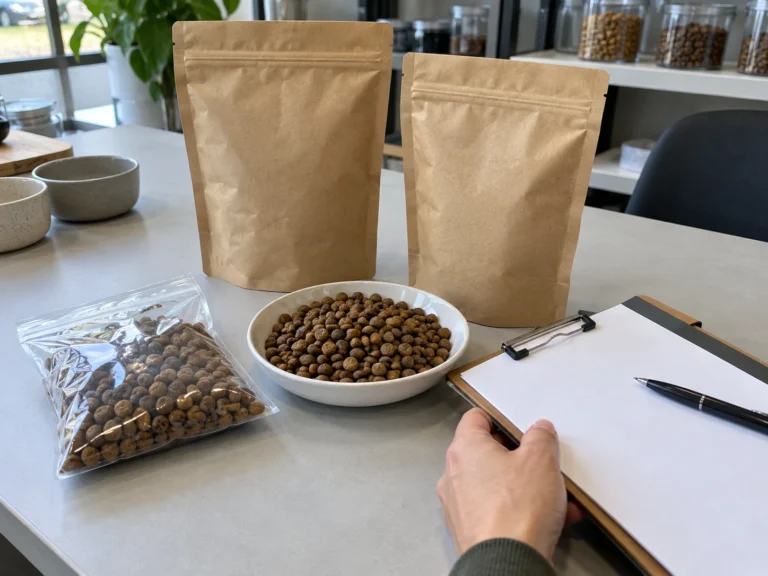
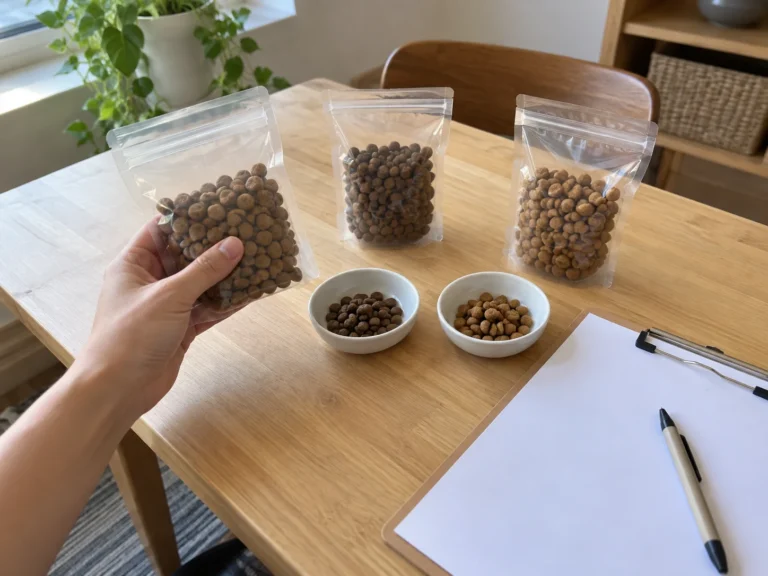
Agree the physical sample criteria, any feeding-acceptance evaluation and the information needed to support the exact proposed statements. Keep informal observations separate from broader evidence claims. Review the final product, label, packaging and storage information together before approving the commercial specification; shelf-life support relates to the selected product-and-pack combination.