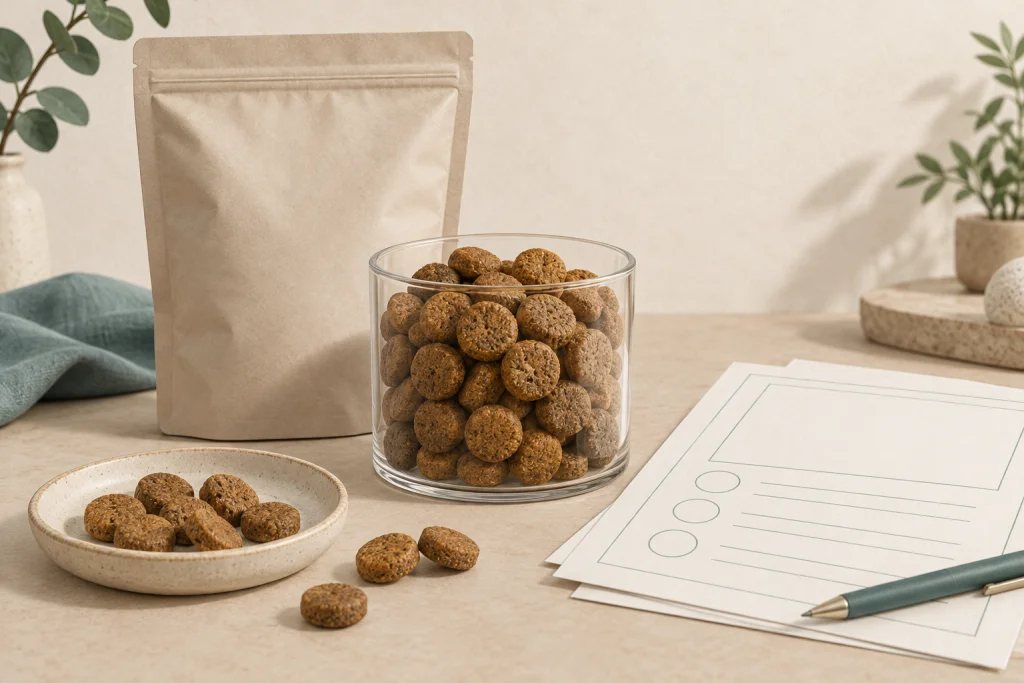
A request for “small-breed kibble” leaves too much open for an OEM, private label or bulk dry dog food order: the finished shape, dimensions and acceptable variation still need agreement. Start with the intended dogs and proposed shape or size, then use finished samples to agree which dimensions the specification must measure.
A useful starting brief contains:
- Intended dog group and product life stage.
- Finished shape, relevant dimensions and sample identifier.
- The comparison question and response to record.
- Proposed measurement method, allowed variation and approval responsibilities. 1234
Which dogs should guide kibble size?
The intended dogs and product life stage define the size brief. Breed-size labels help organize candidate kibbles, but published design ranges and intake preferences cannot select a universal diameter or establish how another dog group handles the finished food. 23
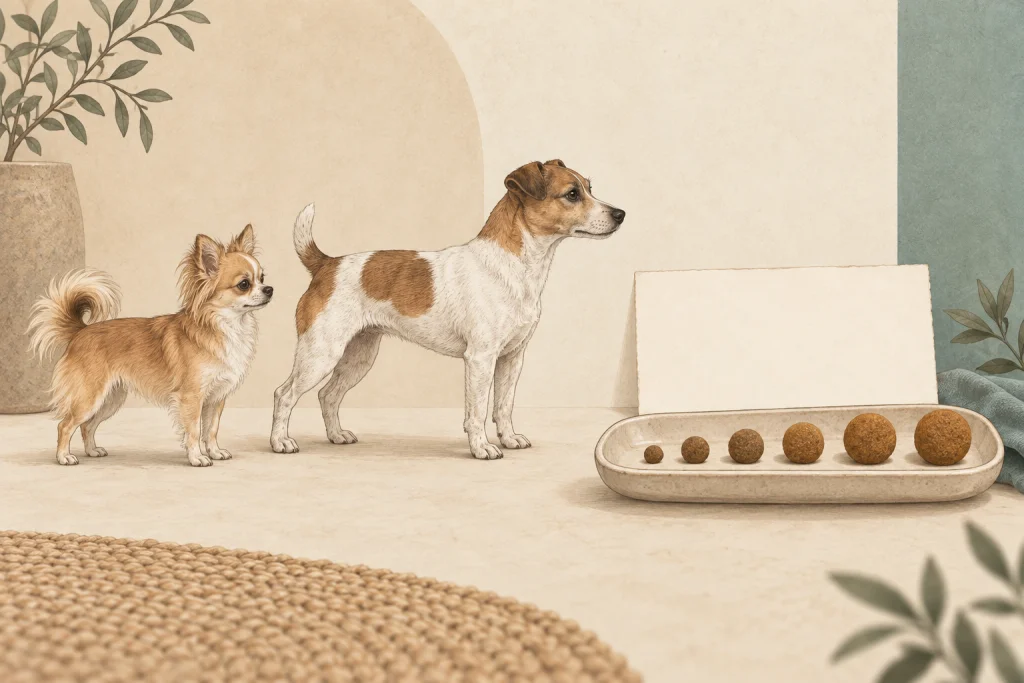
I would start with the intended dogs and the question the sample comparison must answer. Your brief needs the breed-size or body-weight range, the product life stage and whether one kibble is intended for several dog groups.
First Reach's guidance for small adult dogs proposes approximately 5–7 mm for toy dogs weighing up to around four kilograms and 7–10 mm for small dogs weighing around four to ten kilograms. These are proposed design ranges within a small-adult-dog context.
Those figures can frame candidates for that population. If your intended dogs fall outside the described group or life stage, the reference leaves the size choice open. The next step is a finished-sample comparison for the intended dogs, with a stated question: intake preference, or observations of handling, chewing or swallowing. A preference result alone does not answer all of those questions. 23
Which finished dimensions belong in the specification?
A finished-kibble specification needs a named shape, the dimensions describing it, measurement points and a nominal target with allowed variation for each dimension. The nominal target is the intended measurement; the allowed variation states which departures the order may accept. 12
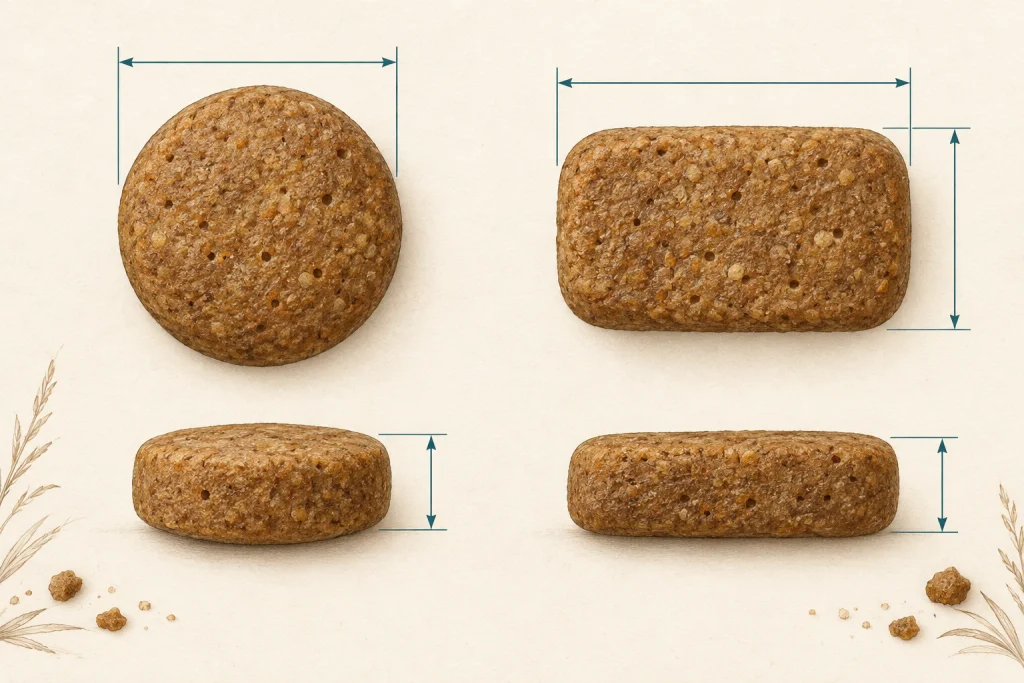
I would make the finished dry piece the size reference in the order. Geometry means the piece's shape and dimensions. In FEDIAF's explanation of dry pet food production, dough passes through a die plate, a plate with shaped openings, and is cut while it expands. The die opening describes the forming input; the order needs a separate record of finished dimensions.
For a round disc, your sample sheet needs diameter and thickness. A nonround piece needs the relevant length, width or other outline measurements plus thickness, with measuring points marked on a drawing. The sample identifier, formula version, units and specification revision tie those measurements to the proposed product.
The shape description and sample outline need to match; a matching width cannot resolve a different shape. Missing thickness leaves the dimensional description incomplete. The next step is a corrected specification or replacement sample before approval refers to that geometry. 12
How should candidate geometries be compared?
Candidate comparisons need the intended dogs, an identified dry dog food and a record of what changed. Diameter, thickness and shape are separate variables. Intake preference describes consumption under the tested conditions; it does not establish chewing or swallowing suitability. 35
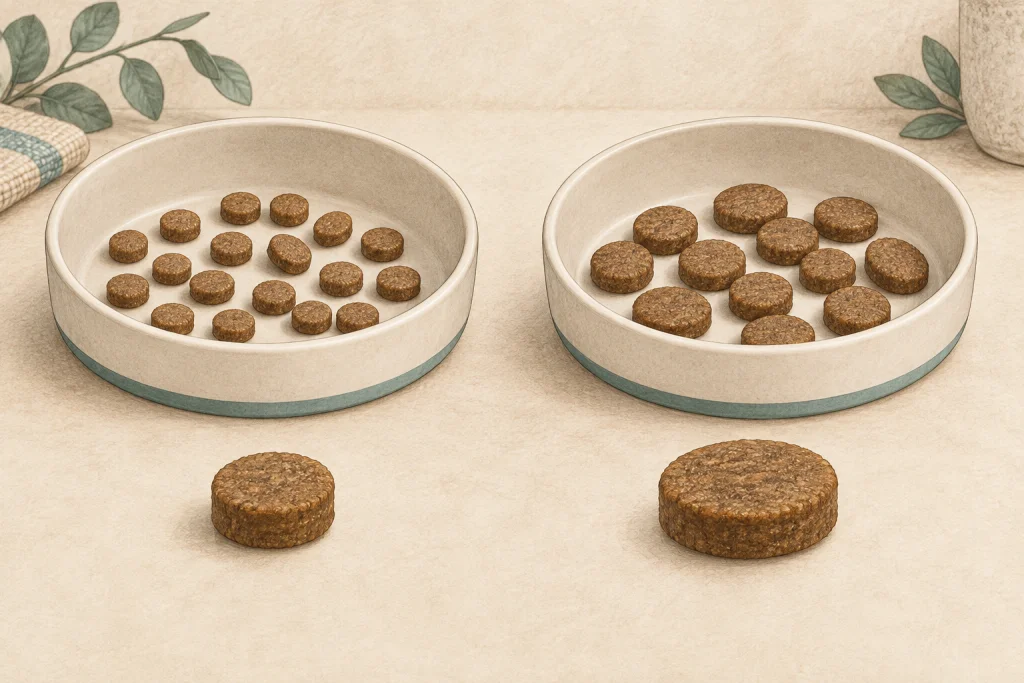
I would compare the sample records before interpreting the dogs' response. For a diameter comparison, shape and thickness need to stay stable. If several features change, your team is comparing the combined geometry. The trial record needs formula and sample identifiers, finished dimensions, dog groups, comparison method and response measured.
AFB International's paired comparison used 120 dogs in three weight groups and tested diameters of 7–8 mm, 11–12 mm and 15–16 mm. Each group preferred the 15–16 mm option over the smaller tested options. This was a consumption and preference comparison with two bowls, not a diameter recommendation for every dog food.
A review of kibble palatability reports no significant cross-versus-round preference among dogs below 10 kg in a cited comparison, while dogs above 10 kg consumed more cross-shaped kibble. The groups received different diets, which may have influenced the result.
If a trial changes diet alongside shape or omits thickness, it cannot isolate the contribution of geometry alone. A further comparison would need to address that gap before the result guides the finished-size choice. 35
How are finished kibble dimensions accepted?
Finished kibble dimensions are accepted against a product-specific written method, sampling plan and allowed variation linked to an approved sample. The approval record identifies the sample, specification revision, measured results and decision owners, giving a later dimensional mismatch a defined next step. 4
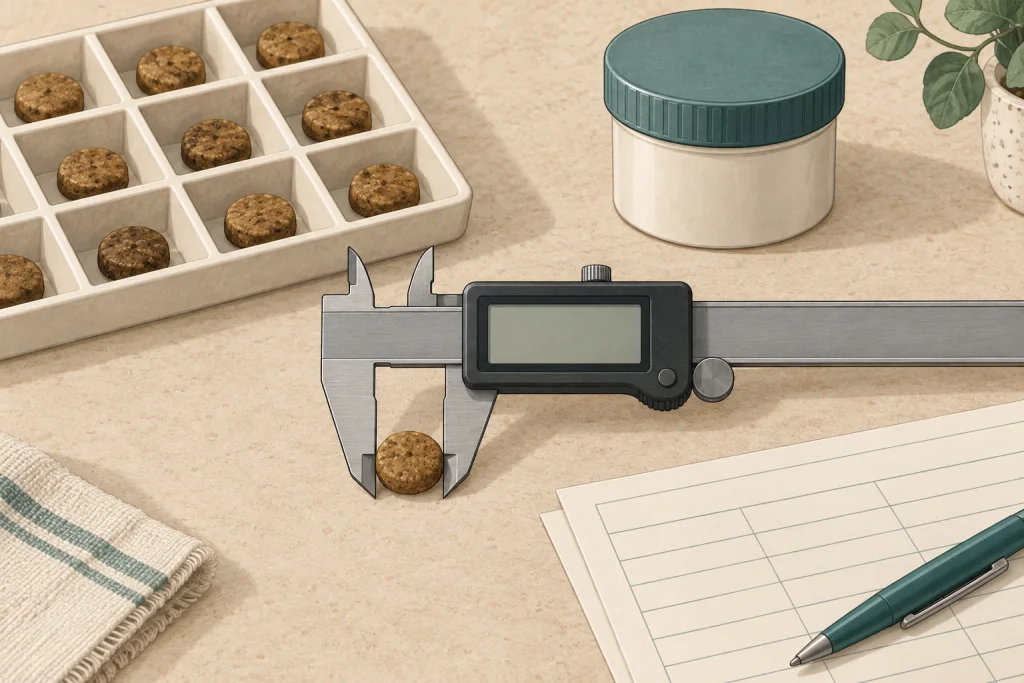
I consider a nominal diameter incomplete until the order states how it will be measured and judged. An extrusion study measured the diameter and length of 15 wet and dry kibbles twice with a digital caliper, a measuring tool with sliding jaws, then averaged the readings. Wet and dry describe processing stages here. This is a measurement example, not a general order sample count or dimensional limit.
Under a proposed order arrangement, the measurement sheet identifies the finished dry-kibble stage, tool, measuring points, piece-selection method, sample count and readings. The decision rule states whether limits apply to individual readings, an average or another agreed result. An average alone cannot establish that every piece meets an individual-piece limit.
The written arrangement can assign sample selection to your brand and measurement reporting to the manufacturer's quality representative. If dimensions fall outside the limits, the mismatch record needs the affected measurements, repeat readings under the same method, proposed correction and person authorised to decide acceptance. A replacement sample or revised specification then needs its own approval record. These responsibilities become order requirements through the written agreement. 4
Conclusion
A usable kibble-size brief links the intended dogs to a finished sample, measurable dimensions and an order-specific acceptance decision. Published ranges and preference findings help frame the work without supplying the numerical terms for your product.
For a kibble-size inquiry, send the destination country, product type (dry dog food), sales channel, price positioning, packaging sizes and expected quantity. Add the intended dogs and product life stage, proposed shape and dimensions, plus any available sample or drawing. These details give us a starting point for discussing sample candidates and a measurable specification for your OEM, private label or bulk order. 134
References
-
How dry pet food is made | FEDIAF. Retrieved 2026-10-05. ↩ ↩ ↩ ↩
-
OEM Formulation Design for Small-Breed Dry Dog Food: Functional Ingredient Selection and Development Considerations | First Reach Thailand. Retrieved 2026-10-05. ↩ ↩ ↩ ↩ ↩
-
AFB International: Small Dogs. Large Kibble.. Retrieved 2026-10-05. ↩ ↩ ↩ ↩ ↩ ↩
-
Extrusion Processing Modifications of a Dog Kibble at Large Scale Alter Levels of Starch Available to Animal Enzymatic Digestion - PMC. Retrieved 2026-10-05. ↩ ↩ ↩ ↩
-
Insights to Study, Understand and Manage Extruded Dry Pet Food Palatability - PMC. Retrieved 2026-10-05. ↩ ↩
From research to a product brief
Explore the related OEM direction
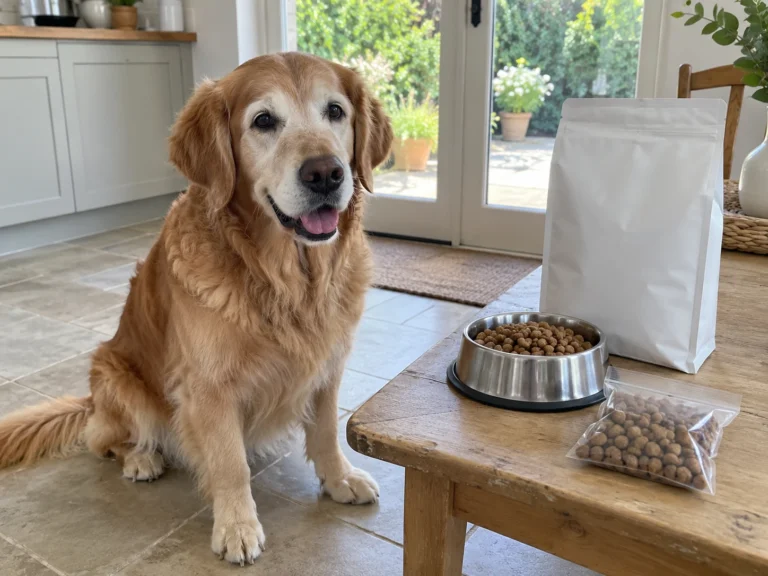
Senior Dog Dry Food OEM & Private Label
A senior-dog dry food development direction for brands and importers planning a distinct range extension. Review the intended population, nutritional role, ingredient and flavour preferences, kibble, samples and pack formats before approving a commercial specification.
Explore this direction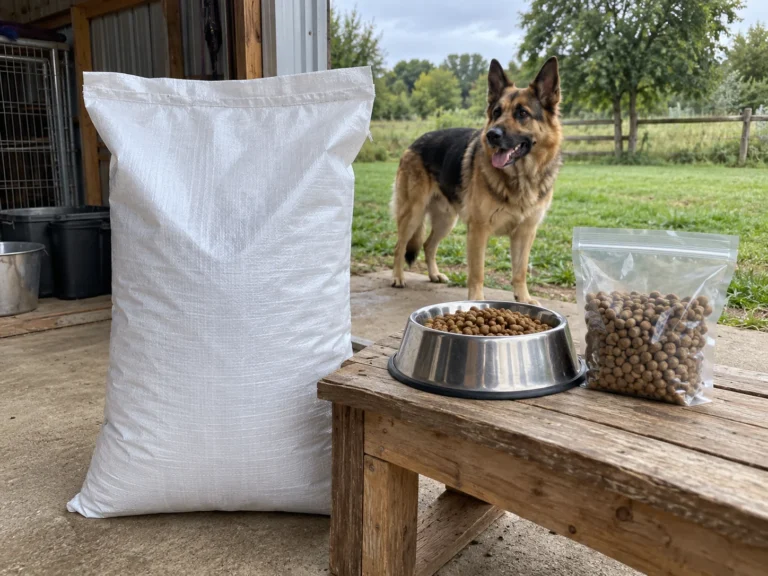
Working Dog Food OEM & Private Label
Source working dog food OEM options with a defined nutrition brief, kibble, bulk packaging, sample checks and repeat-order requirements for your brand.
Explore this direction