Before an extruded cat or dog kibble sample becomes an order benchmark, its approval scope, product specification, lot acceptance rules and any packaged shelf-life condition need to be written down. For your OEM, private-label or bulk order, this practical checklist connects the reference to the decisions it must support:
- Sample identifier and version, approval purpose, date and approver.
- Cat or dog product, intended life stage, ingredient constraints and specification version.
- Nutrient reporting basis, test methods, limits and physical comparison criteria.
- Lot definition, sampling and retention arrangements, result reviewer and mismatch procedure.
- Pack configuration, storage conditions and assessment plan for any proposed unopened shelf life.
These are proposed agreement fields. The accepted specification and order terms define the commitments.
What Does Sample Approval Actually Cover?
Sample approval covers only the product attributes and decision recorded for that reference. An order benchmark needs a sample identifier, approval scope, linked specification and rules for assessing later lots; development or appearance approval leaves other acceptance questions open.

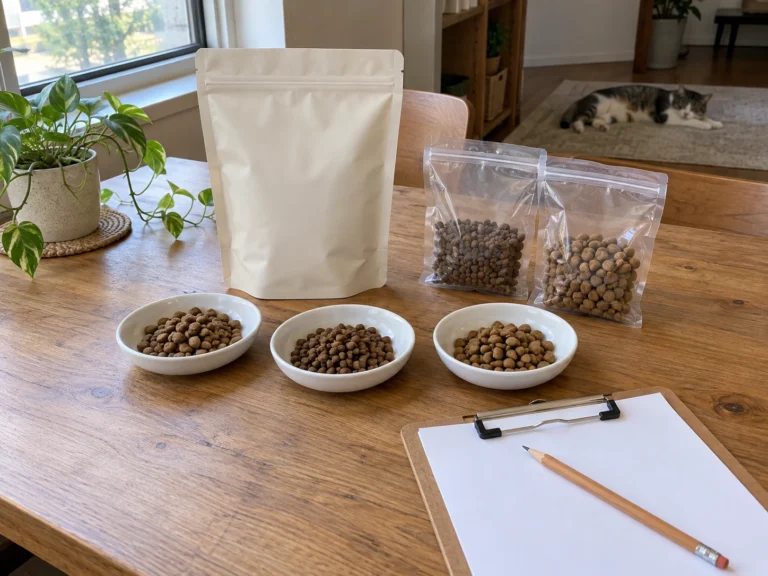
I would give appearance approval its own scope in the record. A development sample can guide further work; an intact appearance reference can support a visual comparison; an order-acceptance reference needs the specification and lot rules alongside it.
The approval record should carry the sample identifier and version, cat or dog product description, intended life stage where applicable, approval date, approver and exact attributes covered. Link it to the governing specification version and identify any decisions still open.
If the sample label and specification show different versions, pause approval while the responsible teams identify the intended pair. A specification revision should state whether the existing reference sample still applies. Approval of the reference leaves later lots subject to their own sampling and acceptance decisions.
Which Specifications Define the Approved Kibble?
The approved kibble is defined by a versioned specification linking species, intended life stage, ingredient constraints, nutrient measures and physical attributes to the sample. Each criterion needs a method and permitted range, with the reporting basis stated for nutrient results. 1
Start with species, the proposed product and any intended life stage or ingredient constraints. A formula direction remains a development input until the finished specification and any product claims are confirmed. Keep the sample identifier and specification version together so your team knows which sheet governs the comparison.
Each nutrient row should state the measure, target or minimum or maximum, unit, test method and reporting basis. “As-fed” expresses the result relative to food including its water; “dry matter” excludes moisture from the comparison. University of Nebraska–Lincoln guidance recommends dry-matter comparisons of nutrient content.
I treat a reporting-basis mismatch as a comparison problem first. Ask the laboratory to clarify the basis and whether comparable figures can be provided before judging the result against the specification.
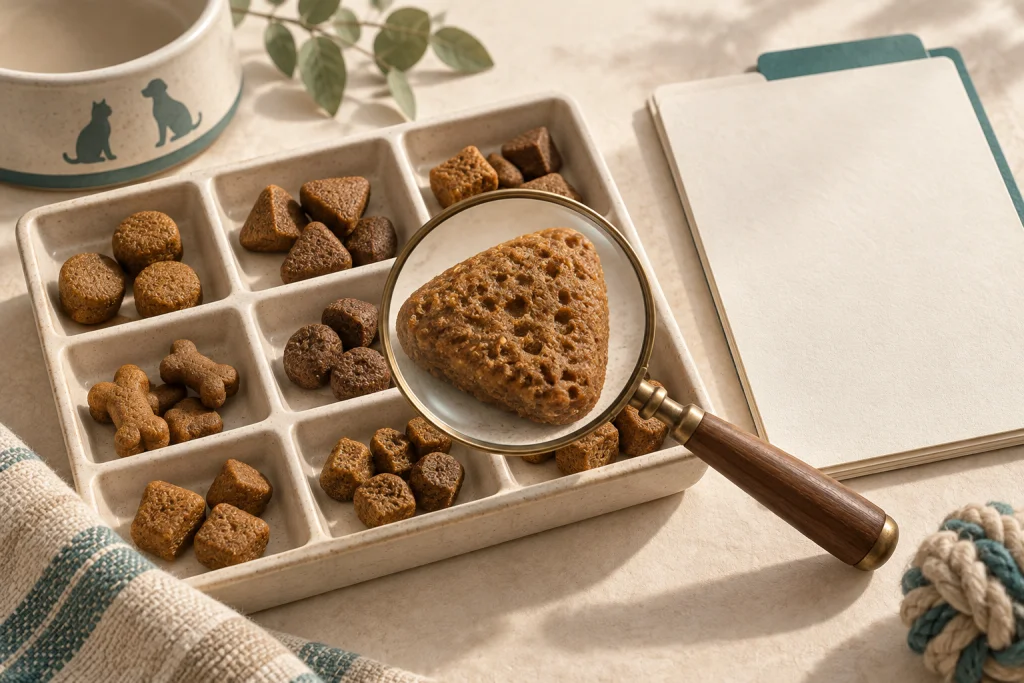
For physical attributes, size distribution describes the spread of kibble sizes. Record the selected size, shape, colour, surface condition or texture criteria, the assessment method and permitted range. A mismatch can then be described against a particular criterion and passed to the named technical reviewer.
Palatability concerns willingness to eat; digestibility concerns how much of the food is digested. If either is proposed as an acceptance criterion, its evaluation needs a separate place in the specification. Appearance approval cannot settle those questions. 1
How Are Production Lots Tested and Accepted?
Production lots are assessed against the written sampling and acceptance plan attached to the order. The plan defines the lot, sample collection, test criteria and responsible reviewers, together with the handling of borderline results, retesting and release or rejection. 2
A lot is the defined quantity of production assessed together. Put its identification and boundaries in the order plan, along with collection locations, portions to collect, combining or reduction instructions, sample handling and retention arrangements. Keep an intact appearance reference separate from portions prepared for laboratory analysis.
AAFCO’s Feed Inspector’s Manual states that meaningful analytical results depend on a representative sample. Where a sampling trier—a sampling probe—is used, the manual specifies a slot equal to or larger than the largest particle, grain or pellet in the material. That guidance supports sample collection; commercial acceptance criteria still belong in the order documents.
I would settle retest and release authority before reviewing a disputed result. Name the people responsible for collecting samples, reviewing reports and authorizing lot disposition—the decision to release, hold or reject the lot.
The proposed procedure should distinguish an identification or method mismatch from a comparable result outside the agreed range. The former goes back for clarification or corrected sampling; the latter follows the written failure procedure. For a borderline result near a limit, the plan should state how variation is handled, when retesting is permitted and how original and repeat results affect the decision. The result report and the authorized lot decision should remain separate records. 2
What Must Packaged Shelf Life Demonstrate?
A packaged shelf-life benchmark needs results covering the proposed unopened duration in the specified pack and storage conditions. The assessment record connects product and package checks to review dates, acceptance criteria and the action required when conditions or results differ.
I would assess a proposed shelf life separately from approval of the freshly made sample. A favourable initial appearance does not answer whether the packaged product meets the selected criteria over the proposed unopened duration.
The assessment record should identify the product and sample, package specification and version, pack size, storage conditions, proposed duration, review dates and responsible reviewer. Each selected check—such as moisture, package condition or another relevant quality measure—needs its method, result and agreed criterion in the same record.
Where shelf life is an order condition, review which part of the proposed duration the available results actually cover. A record ending earlier leaves the remaining period unresolved; the next step is to identify the additional assessment needed before accepting that condition.
If the package or storage assumptions change, the responsible technical reviewer should assess whether the earlier record still applies and document any further work. The accepted order terms should state the resulting scope of the shelf-life commitment.
Conclusion
If your team is ready to use a sample as the benchmark for an OEM, private-label or bulk order, send the sample identifier, specification version and any unresolved comparison with your inquiry to ZoePetSup. Include your destination country, cat or dog food, sales channel, price positioning, packaging sizes and expected quantity. State whether the open issue concerns appearance, nutrient results, lot acceptance or packaged shelf life, so the discussion focuses on the documents and decisions needed for your order.
References
-
Pet Foods: How to Read Labels. Retrieved 2026-10-05. ↩ ↩
-
Feed Inspector’s Manual. Retrieved 2026-10-05. ↩ ↩
From research to a product brief
Explore the related OEM direction
Sensitive Stomach Cat Food OEM
Plan sensitive stomach cat food OEM development with ingredient traceability, sample criteria, label review and private label packaging requirements.
Explore this direction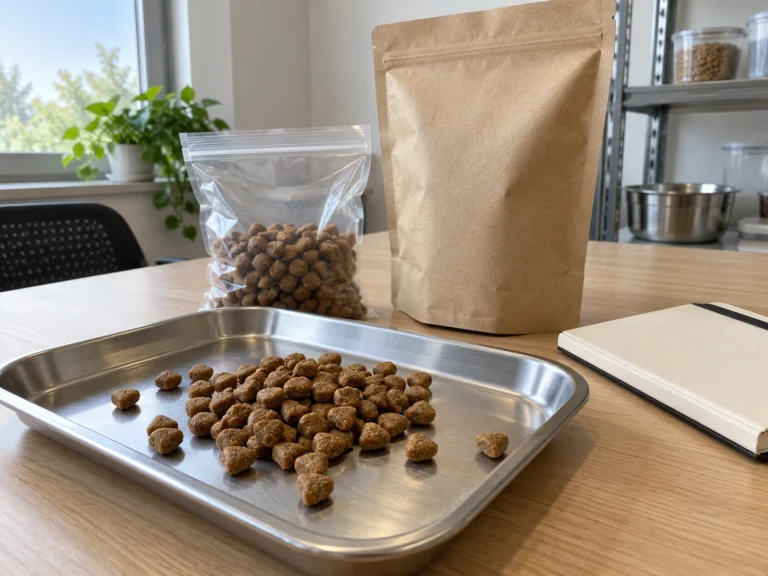
Baked Dog Food OEM & Private Label
Plan baked dog food OEM development: compare process routes, texture, breakage, packaging and sample requirements before a private label quotation.
Explore this direction