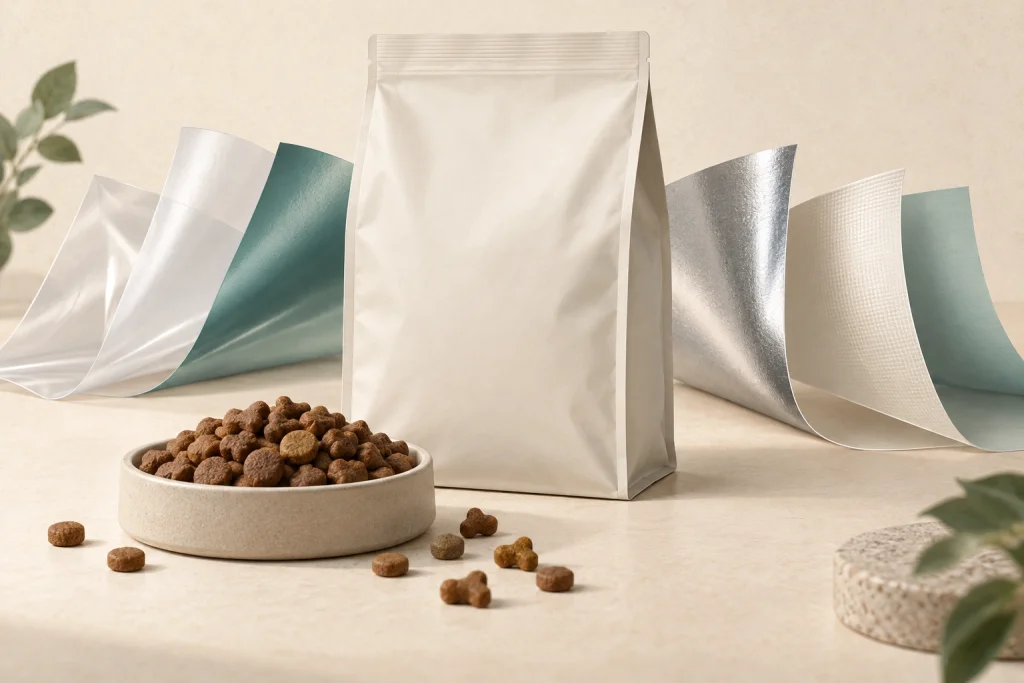
Packaging barriers for dry cat and dog kibble need a product brief, comparable film measurements and results from the filled bag. A film data sheet alone cannot show whether a package protects the specified extruded kibble throughout its intended shelf life. I would start by separating the performance target from the results needed to support it.
Your packaging brief needs these records:
- Product record: cat or dog kibble, formula direction and proposed fill weight.
- Pack record: bag size, material structure, closure and intended filling and sealing conditions.
- Exposure brief: intended unopened shelf life, storage conditions and distribution route.
- Film reports: OTR and WVTR values, units, methods, temperature and relative humidity.
- Trial plan: product-quality criteria, seal and leak checks, handling assessment and acceptance responsibility. 12
Which Product And Distribution Factors Set Requirements?
The packaging brief starts with the specified extruded cat or dog kibble, pack configuration, intended shelf life, storage conditions and distribution route. These inputs define the exposures to assess and identify which filled-bag configuration the eventual approval covers. 2
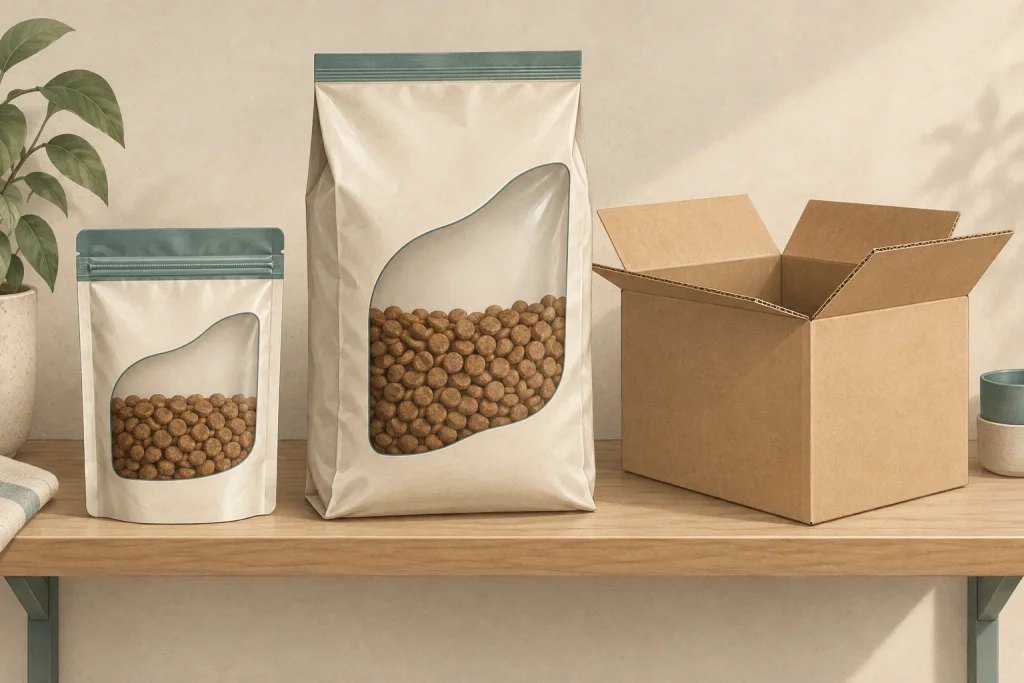
For an OEM, private-label or bulk dry-kibble project, the brief begins with the product to be filled. State whether it is cat or dog kibble, the formula direction and the period the unopened product is intended to retain its specified quality. That period is a target for the chosen product and pack, rather than a shelf-life promise.
Your pack drawing and sample record should identify bag size, fill weight, closure and headspace—the space above the kibble. I would keep retail and bulk bags as separate approval configurations. A trial with a different fill weight or closure leaves the proposed configuration unevaluated.
The exposure brief records expected storage conditions and the distribution route, including relevant humidity, light, odour-transfer and handling risks. The proposed responsibility record assigns the brand team’s intended-use requirements, the packaging supplier’s material reports, the manufacturer’s trial conditions and the person responsible for acceptance. A change to the route, formula or bag configuration calls for a review of the affected tests. 2
How Do Kibble Properties Affect Barrier Priorities?
Moisture protection addresses the specified kibble’s quality during storage, while oxygen protection addresses formula-dependent oxidation. Starting product condition, ingredients and acceptable quality changes guide the trial. Fat content alone cannot establish an oxygen-barrier limit for every cat or dog formula. 234
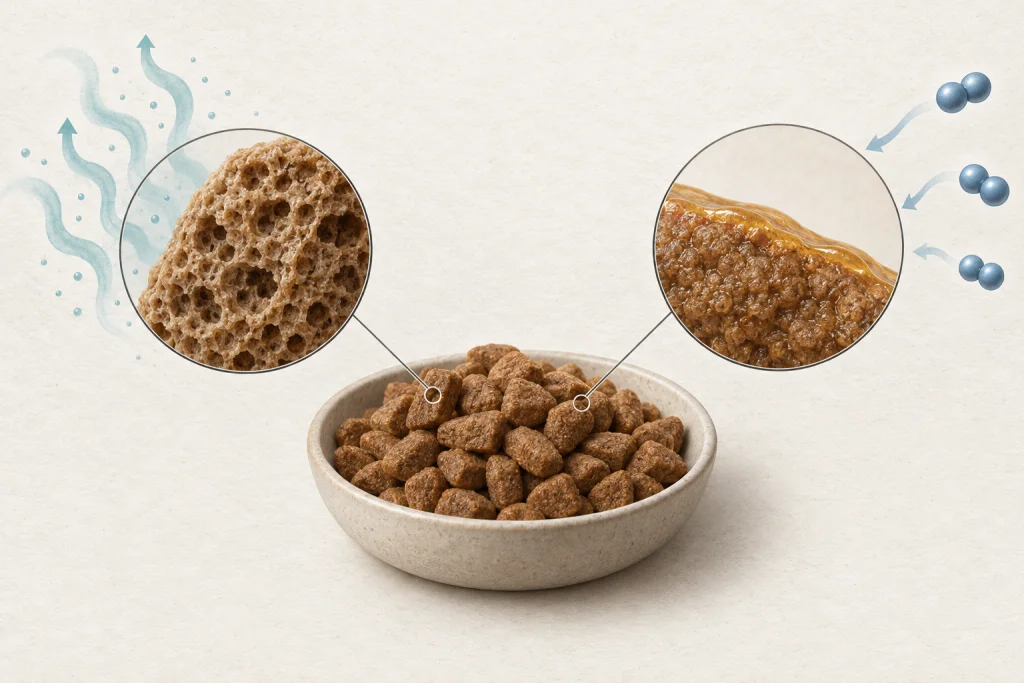
Dry pet food may encounter oxygen and moisture after packing. The product-quality record needs a starting condition and named endpoints: the characteristics that will be assessed, the method used and the change considered unacceptable. Moisture protection is assessed against those product-specific endpoints during the intended storage period.
Fat and oil bring a separate concern. Oxidation is a chemical change in fats and oils that can produce an undesirable aroma. Its development in extruded pet food depends on the ingredients used. For a higher-fat direction, I would give formula-specific oxidation results more weight than a generic high-barrier description.
Your trial record should connect each observation to the formula, sample, storage conditions and assessment point. An aroma change outside the proposed criterion calls for a review of the formula and packaging together; the observation alone does not identify film transmission as the cause. Revised product or material candidates then need assessment under the intended conditions. General oxidation background explains the risk but does not establish an OTR limit or a ZoePetSup shelf-life commitment. 234
How Should Candidate Film Barriers Be Compared?
Candidate films are compared through measured oxygen transmission rate (OTR) and water-vapour transmission rate (WVTR), with units, methods, temperature and relative humidity recorded. Missing conditions or different specimens prevent a direct ranking; material reports alone do not qualify the filled bag. 125

Oxygen transmission rate (OTR) measures oxygen passing through film; water-vapour transmission rate (WVTR) measures water vapour passing through it. ASTM D3985 identifies an OTR method for plastic film and sheeting, while ASTM F1249 identifies a WVTR method for those materials.
Use a comparison record with the following fields:
| Report field | Comparison and next step |
|---|---|
| Film structure and specimen | The report identifies the proposed material; a different structure leaves the candidate without matching data. |
| Value, units and specimen basis | Film and whole-package rates describe different specimens and cannot be ranked as interchangeable values. |
| Method, temperature and relative humidity | Different conditions prevent a direct ranking; request comparable results or an explanation of the difference. |
| Proposed acceptance criterion | The criterion belongs to the specified product and storage brief, rather than being inferred from the method name. |
I would leave a candidate unranked when its report omits units or test conditions. The AMETEK example records temperature and relative humidity alongside transmission results; its conditions are not dry-kibble specifications.
Metallised film remains a candidate structure. A laminate name does not establish seal performance, grease resistance or finished-bag quality. Material reports screen options; the filled-pack results complete the selection. 125
How Is The Filled Package Validated?
Filled-package approval depends on representative kibble trials under the intended filling and sealing conditions, separate seal and leak checks, and product-quality and handling results. A film transmission result cannot establish whether the finished bag meets the project’s agreed criteria. 1256
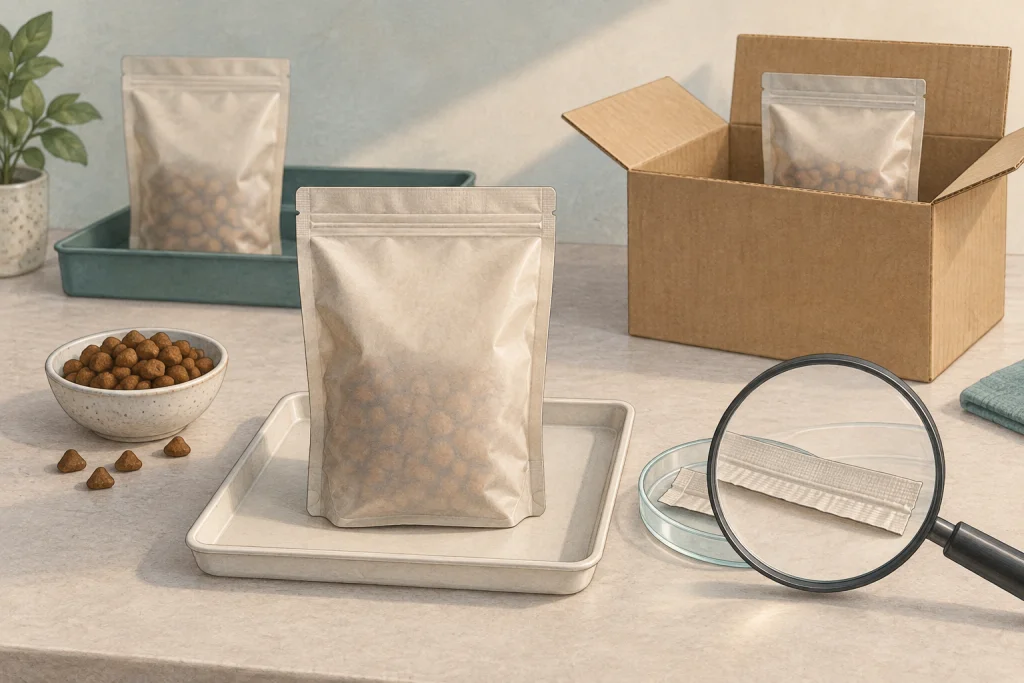
Evaluate the candidate pack with the specified kibble after filling and sealing under the intended conditions. The sample record should identify the product, bag structure, fill weight, headspace, closure and packing conditions so a result can be traced to the proposed configuration.
Seal strength and leak checks answer separate questions. The inspection record can also cover dust or oil in the seal area, wrinkles, channels, incomplete seals and contamination in a fitted zipper. Grease and puncture assessments follow the actual product. If film data meet the proposed criterion but a bag leaks, the finished format still needs correction and another assessment of the affected seal or closure.
Storage assessment follows product-quality changes under defined conditions for the intended shelf-life period. Handling assessment addresses package survival through the expected route, including relevant drop, compression, stacking and carton-orientation risks. One result cannot substitute for the other.
Before ordering, your decision record should place each required result beside its criterion, identify any mismatch, name the party responsible for corrective work and state who accepts the revised pack. These are proposed project requirements; the agreed scope and recorded results determine what can be accepted for that configuration. 1256
Conclusion
I would recommend approving a format only when the specified kibble and finished bag meet the quality and package criteria agreed for your project, with those criteria and the filled-pack results reviewed before ordering. A packaging inquiry is useful when your brand needs to connect the formula direction and proposed bag with the documents and trials still required.
For a dry-food packaging discussion, send the destination country, cat or dog product, sales channel, price positioning, pack sizes, expected quantity, formula direction, intended shelf life, and expected storage and distribution conditions. 25
References
-
AMETEK MOCON: Shelf Life and Testing the Whole Package. Retrieved 2026-10-04. ↩ ↩ ↩ ↩ ↩
-
Kemasan fleksibel untuk makanan dan camilan hewan | Huasheng Packaging. Retrieved 2026-10-03. ↩ ↩ ↩ ↩ ↩ ↩ ↩ ↩ ↩ ↩
-
The safety of pet food | FEDIAF. Retrieved 2026-10-04. ↩ ↩
-
The Impact of Rendered Protein Meal Oxidation Level on Shelf-Life, Sensory Characteristics, and Acceptability in Extruded Pet Food - PMC. Retrieved 2026-10-04. ↩ ↩
-
Paper Standards and Packaging Standards - Standards Products - Standards & Publications - Products & Services. Retrieved 2026-10-04. ↩ ↩ ↩ ↩ ↩
From research to a product brief
Explore the related OEM direction
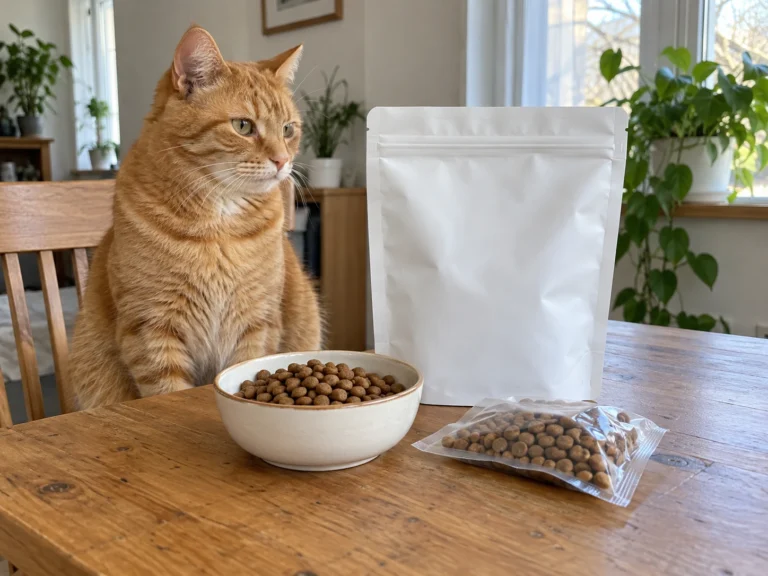
Skin & Coat Cat Food OEM
Develop a skin and coat cat food SKU with ingredient specifications, packaging, sample checks and evidence for label wording. Discuss OEM with ZoePetSup.
Explore this direction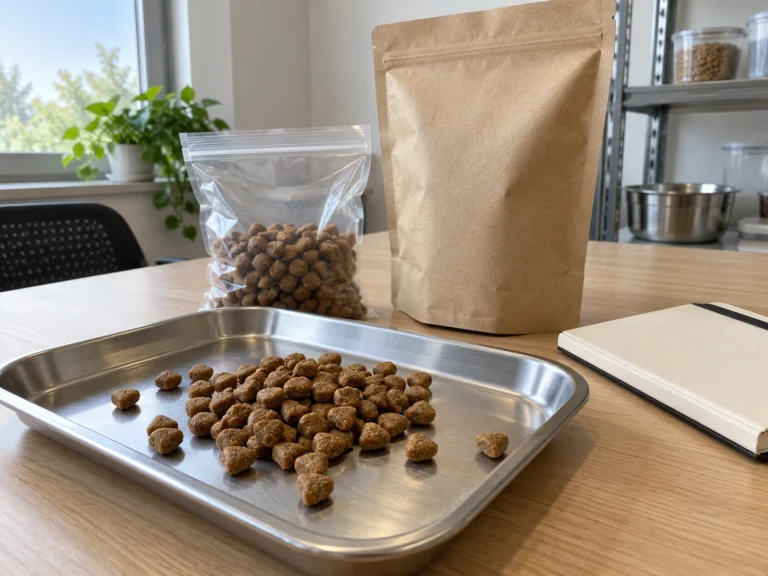
Baked Dog Food OEM & Private Label
Plan baked dog food OEM development: compare process routes, texture, breakage, packaging and sample requirements before a private label quotation.
Explore this direction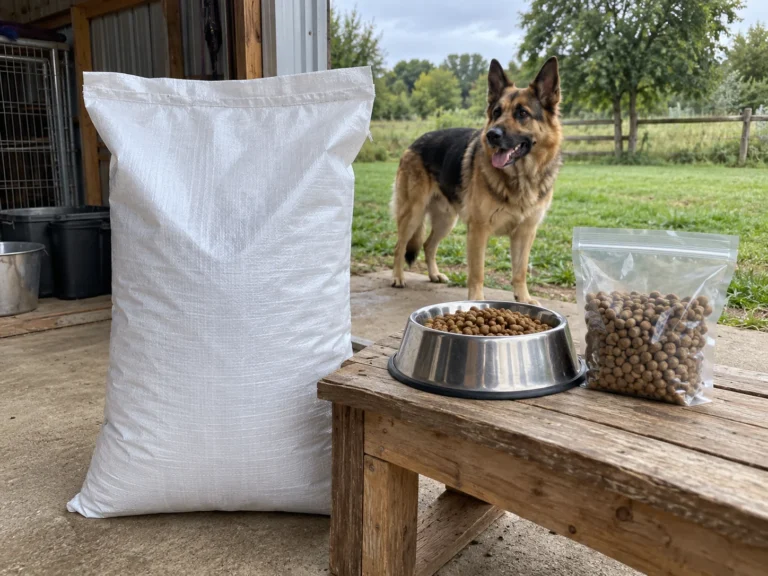
Working Dog Food OEM & Private Label
Source working dog food OEM options with a defined nutrition brief, kibble, bulk packaging, sample checks and repeat-order requirements for your brand.
Explore this direction