Evaluate an extruded dry cat food sample by matching the test to the decision, reading consumption alongside study conditions, and tracing the conclusion to records for each cat and day. A sample described as “preferred” still raises a practical question: preferred to what? I would first decide whether your brand needs acceptance of the sample alone or preference against a named food.
- The sample brief states acceptance, paired preference or both.
- The candidate and any comparator are named in the report.
- Starting portions, leftovers, session timing and bowl positions are available.
- Results by cat and day explain the headline conclusion.
- Routine household feeding is addressed separately when it is part of the decision. 123
Which test answers the sampling question?
A one-bowl test measures acceptance of a dry cat food sample offered alone; a two-bowl test measures preference against a named food presented simultaneously. The relevant method depends on whether the sample decision concerns eating one food or comparing two foods. 12
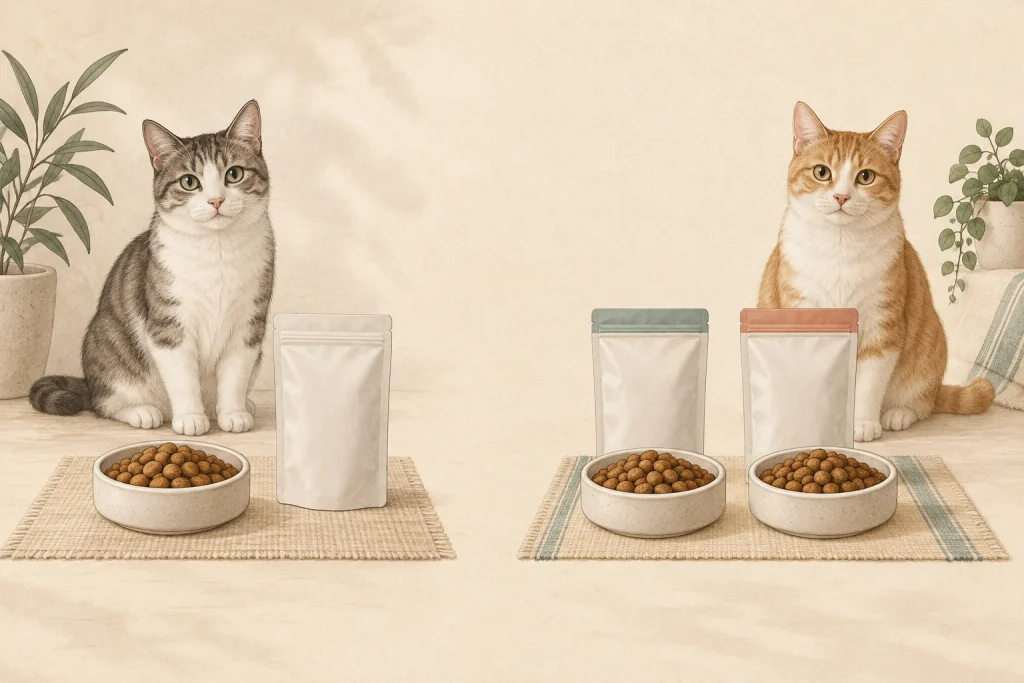
A one-bowl test presents a preweighed food as a meal for a defined period. Intake and speed of consumption describe acceptance under those conditions. The review of the two methods also describes a two-bowl test, which offers two foods at the same time and measures preference between them.
If your decision is whether a candidate kibble is eaten on its own, an acceptance measure addresses that question. If you need to compare it with another food, that reference food is the comparator. Its identity belongs in the brief alongside the paired-preference question. The paired result applies to that comparison; a one-bowl observation of a single food cannot directly establish preference between two foods.
A report headed “preferred” but based only on one food offered alone leaves a method mismatch. The next step is a report conclusion limited to acceptance or a comparison designed around the named food. The sample-selection decision should follow the outcome actually measured. 12
What makes a paired comparison fair?
A fair paired comparison records both foods, starting and leftover weights, simultaneous presentation, comparable bowls, session timing and bowl positions. These fields make consumption traceable and show how the method addresses side bias, a cat's tendency to favour one position. 12
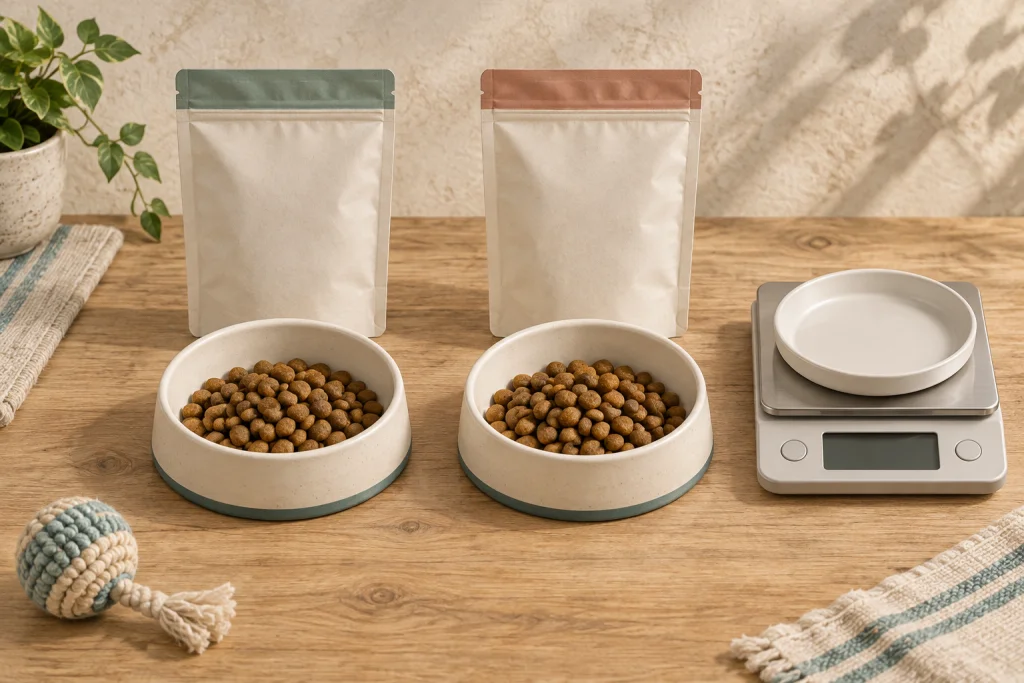
The method record starts with the identity and starting weight of each food. In a paired test, the foods are presented together for a preset period, then the bowls are weighed again. Starting and leftover weights allow the amount eaten from each bowl to be calculated. The session window and any stopping rule distinguish a short observation from intake over a longer period.
Comparable bowls and simultaneous presentation belong in that record. Feeding conditions include when the foods were offered and how long they remained available. The report's own conditions govern the result; another study's schedule cannot fill a missing field.
Side bias is a tendency to favour a bowl position. The position log needs the food shown on each side for every cat and session. Random placement or switching sides on repeat sessions helps address that bias.
When reports differ in bowl type, presentation timing or feeding window, your team is comparing more than the sample identities. The test provider can explain those differences; a further comparison is appropriate if the intended food comparison remains unanswered. 12
What do first choice and intake mean?
First choice describes a defined initial behaviour, such as first approach or first bite. Intake records the amount eaten from each bowl; an intake ratio expresses those amounts using a stated calculation. An initial choice alone does not establish overall preference. 2345
“First choice” needs a definition fixed before testing. Published descriptions use the first food sniffed or tasted. First approach and first bite are separate behaviours, so the report needs its chosen definition to keep observations comparable across cats and sessions.
For each observation, subtract the leftover weight from the starting weight of each food. Keep both consumed amounts beside any ratio. In a calculation written as A/(A+B), A is the candidate amount eaten and B is the comparator amount eaten for the same observation. A ratio using comparator intake alone as the denominator expresses a different relationship, so the formula belongs beside the result.
I read first choice as an initial response and use the intake record to understand what the cat actually ate. If those observations point in different directions, retain both. If neither food is eaten, keep the no-intake session visible rather than assigning it a preference. Before comparing report summaries, put their first-choice definitions, ratio calculations and observation periods side by side. 2345
How much testing supports a decision?
The strength of a preference result depends on cat count, session length, repeat days and analysis. Repeated sessions measure the same cats again. Published schedules describe particular designs; the report needs to explain how its observations support the proposed sample decision. 1356
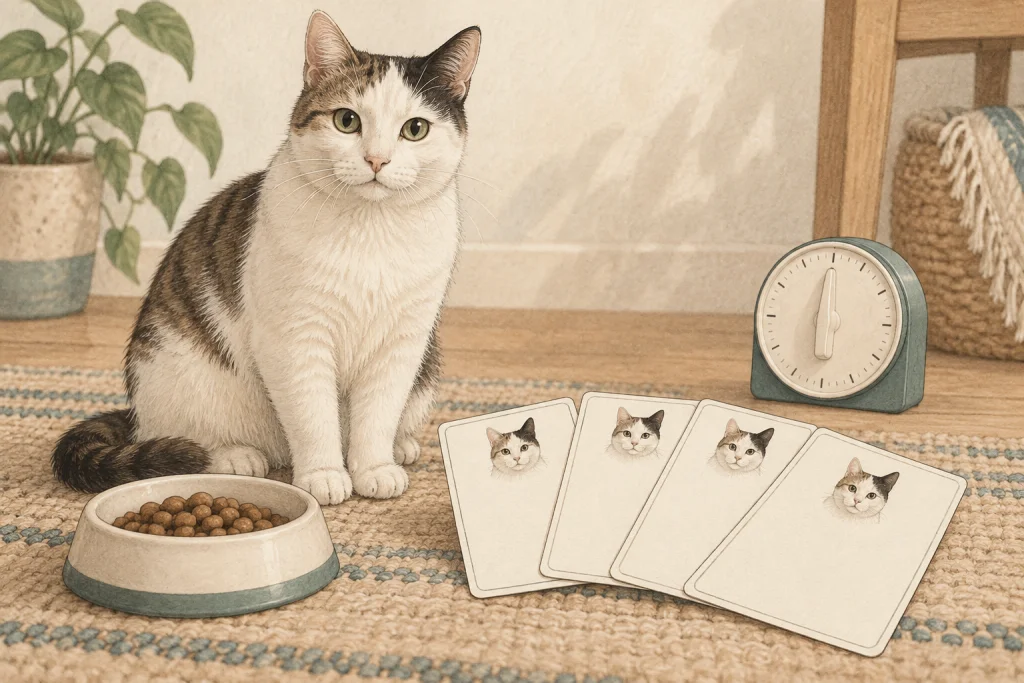
The report needs separate fields for the number of cats, the length of each session and the number of days observed. Session length and repeat days answer different questions. One pet food methods review describes paired presentations of approximately 15–30 minutes; a review focused on extruded dry pet food reports feline access periods up to 24 hours. These figures belong to those published contexts rather than setting the required window for your sample.
Panel size also depends on the study objective. Reports with different combinations of cat counts and repeat days do not establish equal precision. Results by cat and day show whether an overall pattern is consistent or varies across observations.
Repeated days measure the same animal again. The test provider should explain how the analysis handles those repeated measurements, the precision sought and the uncertainty in the conclusion. A total session count cannot substitute for the number of individual cats. If a summary treats every session as an independent animal, the next step is a revised analysis that reflects the actual study design. 1356
What should a sample report establish?
A useful report connects the identified samples, test method, observations by cat and day, and analysis to its conclusion. It also separates paired preference from routine household acceptance and identifies which party supplies the records needed for the sample-selection decision. 12356
A usable report lets your team trace the conclusion back to the test. Its identification page needs the candidate and, for paired testing, the comparator. The method and results need to remain attached to those foods. A documentation error calls for a corrected record; a report on foods that were not the intended comparison calls for a different test before that specific preference question can be answered.
An overall preference figure can hide variation across cats and days. The individual records and analysis show how the conclusion was reached. If routine household feeding affects selection, an appropriate one-bowl home test can address acceptance under the normal schedule and location. A controlled paired result does not itself measure that outcome.
Your brand defines the decision and comparator. The party running the test supplies the method, observations and analysis; the manufacturer identifies the sample against the proposed product specification. These are proposed responsibilities for the written project scope. Any company testing or performance commitment needs its own stated scope, rather than being inferred from a published protocol.
I advance a sample recommendation only as far as its documented method and results allow. 12356
Conclusion
Choose the test for the decision your brand faces, then read the result with its named comparator, intake records and study conditions. A preference label is useful only within the comparison it describes; routine household feeding needs a separate acceptance record when that outcome affects selection.
For the next sample discussion about an OEM, private label or bulk project, identify dry cat food as the product line and send the destination country, sales channel, price positioning, packaging sizes, expected quantity and any comparator. An available sample report helps make the remaining acceptance or paired-preference question clear. 1235
References
-
Measuring palatability of pet food products: Sensory components, evaluations, challenges, and opportunities - PMC. Retrieved 2026-10-04. ↩ ↩ ↩ ↩ ↩ ↩ ↩ ↩ ↩ ↩
-
Assessing Food Preferences in Dogs and Cats: A Review of the Current Methods - PMC. Retrieved 2026-10-04. ↩ ↩ ↩ ↩ ↩ ↩ ↩ ↩ ↩ ↩
-
Pet Food Palatability Evaluation: A Review of Standard Assay Techniques and Interpretation of Results with a Primary Focus on Limitations - PMC. Retrieved 2026-10-04. ↩ ↩ ↩ ↩ ↩ ↩ ↩ ↩
-
Kansas State University repository: Sensory analysis of pet foods (accepted manuscript). Retrieved 2026-10-04. ↩ ↩
-
Insights to Study, Understand and Manage Extruded Dry Pet Food Palatability - PMC. Retrieved 2026-10-04. ↩ ↩ ↩ ↩ ↩ ↩ ↩
-
Drivers of Palatability for Cats and Dogs—What It Means for Pet Food Development - PMC. Retrieved 2026-10-04. ↩ ↩ ↩ ↩
From research to a product brief
Explore the related OEM direction
Indoor Cat Food OEM & Private Label
Plan an indoor cat food OEM SKU around positioning, formula questions, kibble samples and packaging. Send your private label project brief to ZoePetSup.
Explore this direction
Sensitive Stomach Cat Food OEM
Plan sensitive stomach cat food OEM development with ingredient traceability, sample criteria, label review and private label packaging requirements.
Explore this direction