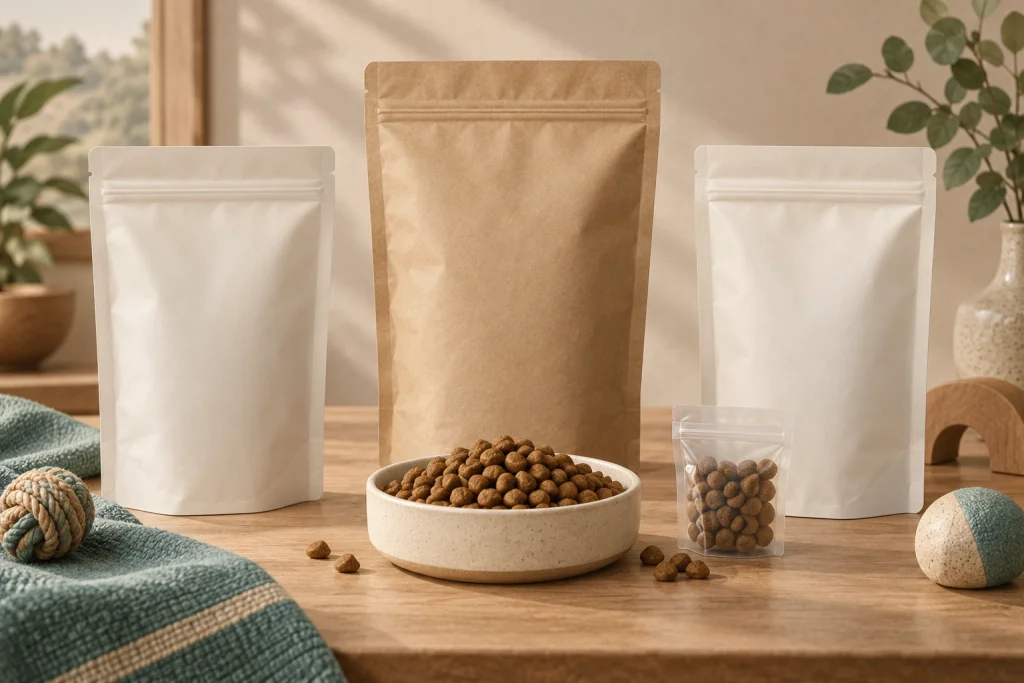
Grain-inclusive or grain-free wording should describe the finished extruded dry dog food formula. Neither term establishes nutritional superiority, an allergy benefit or cardiac protection. I would start with the product’s intended nutritional use, then review its ingredients and nutrient records before choosing a claim.
Your team's decision file needs:
- ☐ Destination country, dry dog food category and intended life stage
- ☐ Sales channel, price positioning, packaging sizes and expected quantity
- ☐ Finished ingredient declaration, including grain ingredients or replacements
- ☐ Nutritional records, intended use and exact proposed grain wording
- ☐ SKU and formula version linking the records to the sample and packaging draft 1
Which grain direction fits the finished formula?
The grain direction should follow the finished formula and its intended nutritional use. Grain ingredients can contribute energy, nutrients and fiber; grain-free formulas need suitable replacements. The ingredient declaration and nutritional records together inform the choice, rather than either label alone. 1
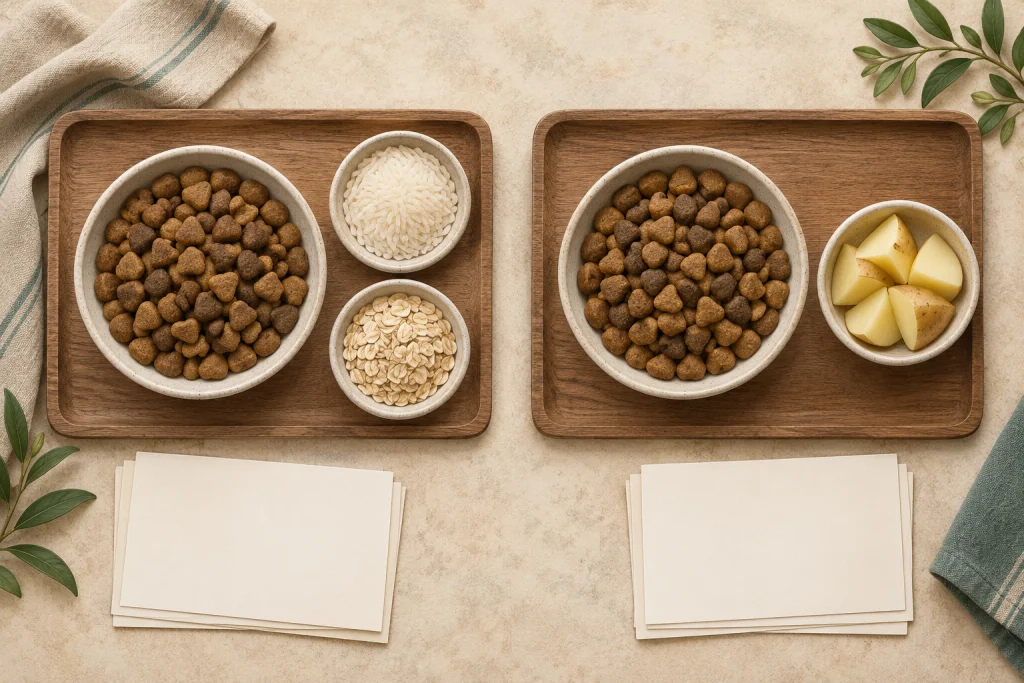
Grain-inclusive dry dog food contains grain ingredients. Grain-free describes exclusion of traditional cereal grains and their derivatives. Grains can contribute energy, essential nutrients and fiber, but their presence alone does not establish the nutritional quality of the finished diet. The intended-use field states the product's nutritional role and life stage.
If grains are removed, other carbohydrate sources are needed to provide energy and nutrients. A review of commercial grain-free dry diets lists potatoes among those sources. That example describes studied diets; the proposed SKU's own ingredient declaration identifies its replacements.
I would compare proposed formulas for the same intended nutritional use, rather than rank them by the grain label. The comparison file can pair each SKU and formula version with its ingredient declaration and nutritional records. Those records need to state nutrient values and units, and distinguish formula targets from finished-product test results. A target describes the proposed formula; a test result describes the product tested.
An ingredient mismatch calls for a corrected declaration or a revised formula proposal. A nutrient record linked to a different formula version leaves nutritional suitability unresolved; the formula owner needs to supply the matching record before your team moves the wording into packaging approval. 1
How should health evidence shape positioning?
Grain wording describes composition without establishing an allergy or heart-health outcome. Grain-free status alone does not establish an allergy benefit, and FDA diet-associated DCM reports do not establish causation. Health positioning needs separate support for the exact wording and finished formula. 123

I would keep grain composition separate from allergy and heart-health wording in both the packaging draft and product listing. Grain avoidance may be relevant to a dog with an individually confirmed grain or gluten sensitivity, but a grain-free label cannot identify an adverse food reaction or establish a general allergy benefit. Clinical assessment of an individual dog belongs with a veterinarian.
The FDA’s DCM questions and answers describe reports of non-hereditary dilated cardiomyopathy, or DCM, associated with both grain-free and grain-containing diets. DCM is the heart condition at issue. The FDA does not know the specific connection between those diets and the reported cases.
The FDA investigation has examined foods with high proportions of peas, lentils, other pulses and/or potatoes as main ingredients. Pulses are legume seeds, including peas and lentils. Those investigation criteria do not establish that the ingredients cause DCM. An updated review also finds a clear causal relationship between grain-free diets and DCM difficult to establish.
For a formula with prominent pulses or potatoes, the technical review can identify those ingredients, their forms and the formula version in the claim file. Their presence raises a formulation question for technical assessment without proving harm. Any proposed allergy-treatment or cardiac-protection wording needs separate substantiation showing that the exact benefit applies to the finished formula. Where that support is absent, the next packaging draft can retain the composition description without the added health promise. 123
What substantiates the final SKU claim?
A final grain claim needs a consistent record for the individual finished product: ingredient declaration, nutritional records, intended use and exact label wording. Formula, sample and packaging versions need to refer to the same SKU before the wording moves to approval. 1
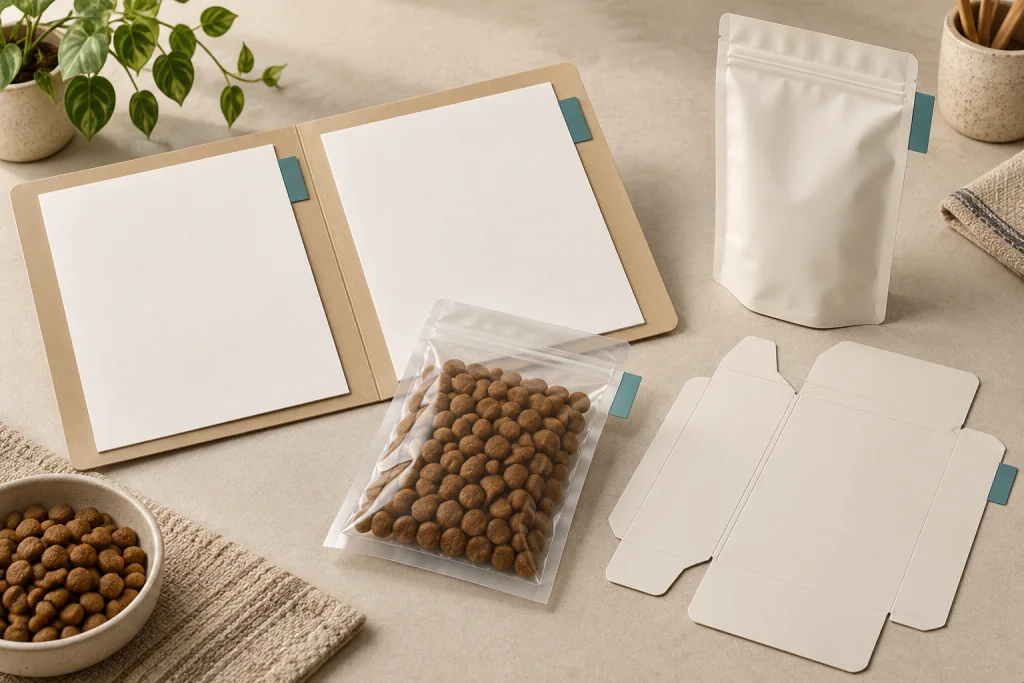
A SKU is an individual product item. A formula direction or another SKU's label cannot establish what it contains. I would keep the formula, sample and label versions together so a changed recipe cannot inherit wording accepted for an earlier version.
Your team's claim record can connect each decision to a document and an owner:
| Record | Comparison | Next step after a mismatch |
|---|---|---|
| SKU and formula version | Ingredient and nutrient records identify the formula linked to the submitted sample. | The formula owner supplies a reconciled document set. |
| Exact grain wording | Grain ingredients or replacements fit the proposed statement. | The formula owner or brand revises the formula proposal or wording. |
| Packaging and product listing | Both use the reviewed composition statement without added health implications. | The brand removes any extension that lacks separate support. |
| Destination-label assessment | The named country, dry dog food category, applicable official source and check date are present. | A regulatory consultant assesses the destination wording before label release. |
These are proposed project requirements. The accepted specification needs to state the document versions and responsibilities. One proposed split assigns formula and product records to the manufacturer, wording and packaging decisions to your brand, and destination-specific interpretation to a regulatory consultant. General nutritional background does not establish a company product commitment. Acceptance for one SKU does not extend the wording to other finished formulas. 1
Conclusion
The grain decision belongs with the finished formula, its intended use and the exact wording proposed for the pack. For an OEM, private label or bulk supply discussion with our team about matching your grain claim to an extruded dry dog food project, send the destination country, dry dog food category, sales channel, price positioning, packaging sizes and expected quantity, together with the intended use and draft grain wording. 1
References
- Grain-Free Diets for Dogs and Cats: An Updated Review Focusing on Nutritional Effects and Health Considerations - PMC. Retrieved 2026-10-05. ↩1 ↩2 ↩3 ↩4 ↩5 ↩6 ↩7 ↩8
- Questions & Answers: FDA’s Work on Potential Causes of Non-Hereditary DCM in Dogs | FDA. Retrieved 2026-10-05. ↩1 ↩2
- FDA Provides Third Status Report on Investigation into Potential Connection Between Certain Diets and Cases of Canine Heart Disease | FDA. Retrieved 2026-10-05. ↩1 ↩2