
Before a hairball claim appears on private-label extruded dry cat food, your team needs a clear link between the exact wording, the finished formula and the destination’s label rules. I start with that link because a fiber ingredient alone does not show what one finished SKU can claim. A SKU is one specified product, identified by its formula version and intended cat life stage.
An early review file should contain:
- ☐ One dry cat food SKU, its formula version and intended life stage.
- ☐ The exact hairball phrase on package artwork and the online listing.
- ☐ Finished-product analyses and relevant hair, stool and digestibility records.
- ☐ The destination country and, for U.S. distribution, intended states. 1
What boundaries apply to hairball claims?
Hairball wording needs a decision for the exact finished dry cat food and destination. “Hairball control,” “reduce hairballs” and “eliminate hairballs” are separate statements for assessment; the package and online listing also need to express the same supported meaning. 12

FDA’s animal-food business guidance, accessed 29 September 2026, says labeling for animal food marketed in the United States must comply with current federal and state regulations. For U.S. dry cat food, that includes the boundary against untrue or misleading information, such as implying more of a beneficial ingredient than the food contains. FDA also says labeling can include promotional websites.
North River Enterprises’ claims substantiation commentary, accessed 29 September 2026, describes promises specifically to reduce or eliminate hairballs as drug claims that are not allowed. That industry commentary does not settle the status of a proposed SKU or authorize “hairball control.”
I would keep the pack phrase and every online variation in one wording record. Its fields should include the exact sentence, intended meaning, where it appears, destination country, intended U.S. states where relevant, and the person responsible for the wording decision. A stronger online promise needs its own assessment even when the package uses more restrained language. 12
What can fiber studies actually support?
The fiber study supports narrow findings about hair measured in feces, stool consistency and digestibility in the tested diets. It does not establish fewer clinical hairball episodes for another finished food; claim decisions depend on matching the proposed wording to the outcome actually measured. 23
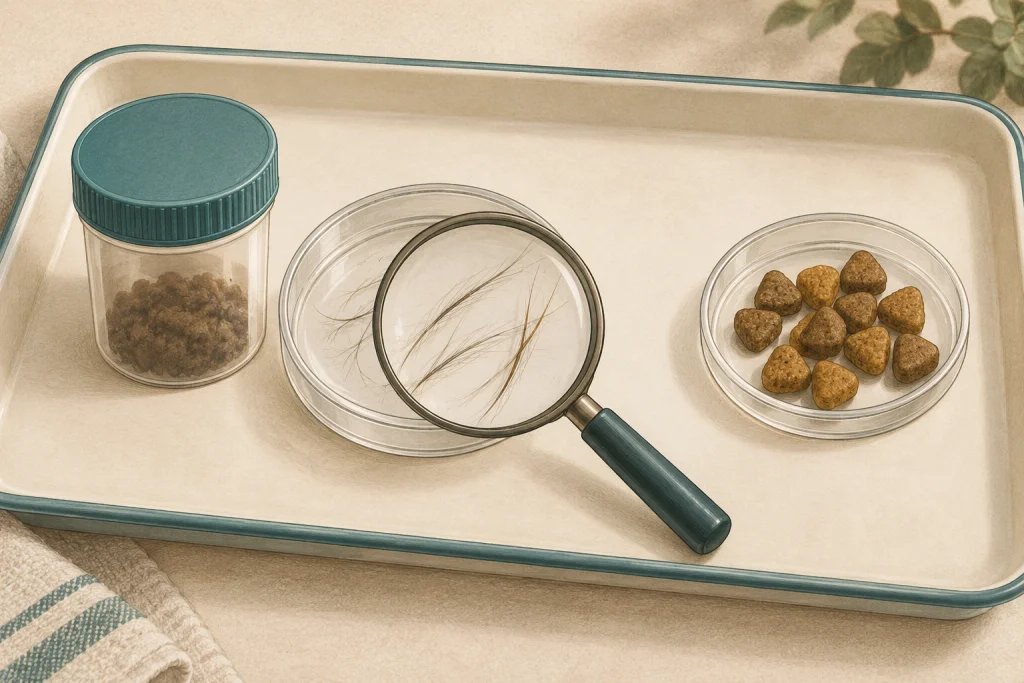
The published feline fiber study measured hair recovered in feces, meaning stools. Cats fed the Miscanthus grass diet had less total hair weight and fewer hair clumps per gram of dry feces than those fed the control diet. The table did not show a significant reduction in absolute total hair weight. The “per gram” result describes hair relative to the amount of dry feces collected; it cannot be read as fewer observed hairball episodes.
The same comparison found harder stools on the Miscanthus hairball diet. That difference deserves attention without being treated as proof of clinical harm. In the fiber-source comparison, the beet pulp diet had higher digestibility of dry matter, organic matter, gross energy and total dietary fiber than the Miscanthus or cellulose diets. Digestibility estimates how much of a food component is digested rather than passed in feces.
I would compare the measured outcome before treating a fiber ingredient as a claim solution. Your technical comparison should identify the tested diet, cat life stage, fiber source and amount, outcome definition, measurement method, and stool and digestibility findings alongside the proposed formula. Where those fields differ, a written rationale should explain whether the result applies. If the proposed wording concerns clinical episodes but the available record measures only fecal hair, the next task is to reconsider the wording or obtain relevant outcome evidence. Published literature may contribute to a claim rationale; it does not become a test record for your finished SKU. 23
Which records support finished SKU review?
A useful finished-SKU file connects the formula revision, intended life stage, sample and analysis records, relevant hairball outcomes, exact artwork and destination. A mismatch identifies the next task: correct the product record, address a missing outcome or revise the wording before packaging is ordered. 1
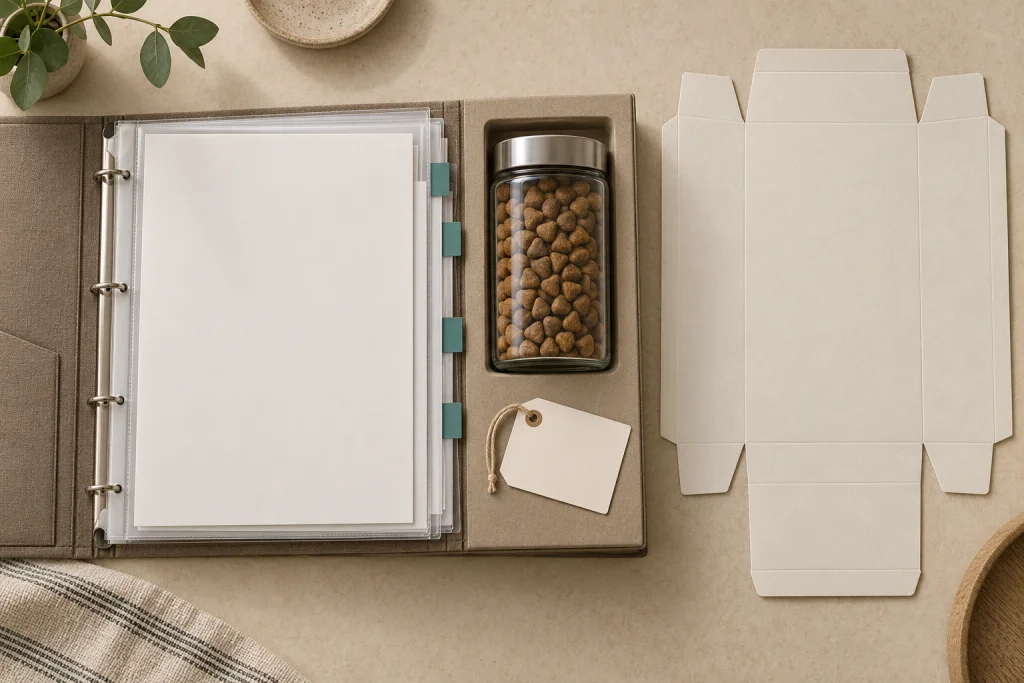
For one OEM or private-label dry cat food SKU, the review file should make the product behind each document identifiable. A quantitative formula lists ingredient amounts; it serves a different purpose from the ingredient declaration printed on the pack. For U.S. dry cat food, FDA ingredient-statement guidance, accessed 29 September 2026, calls for common or usual names in descending order by weight. Position in that list does not establish an effective fiber amount or hairball performance.
| Record | Useful fields | Response to a mismatch |
|---|---|---|
| Product and sample | SKU, formula revision, intended life stage, sample ID and batch reference where available | Different versions return to the manufacturer for an identity correction or an explanation of applicability. |
| Product analyses | Formula and sample identifiers, nutrient composition and finished-product results | Results for another version leave the proposed product’s assessment incomplete. |
| Outcome rationale | Exact measured outcome, diet tested, stool and digestibility findings | A fecal-hair finding does not close a gap in evidence about clinical episodes. |
| Wording decision | Full artwork, ingredient declaration, listing copy, destination, review owner, decision and date | The affected sentence remains on hold while the wording or its support is revised. |
I would pause the packaging decision when the analysis and artwork refer to different formula versions. A proposed responsibility record can assign formula, sample and batch information to the manufacturer, artwork and positioning to your brand, and destination label assessment to a named regulatory consultant. Actual responsibilities belong in the project documents.
Published study findings are background. A proposed specification records what your brand requests; the manufacturer’s written specification and order documents identify the commitments accepted for that project. This review file is practical decision material, not a confirmed FDA filing checklist or a guarantee of hairball performance. 1
Conclusion
For an OEM or private-label dry cat food inquiry, send your proposed hairball sentence with the product brief: destination country and intended U.S. states where relevant, dry cat food SKU and life stage, sales channel, price positioning, packaging sizes and expected quantity. The formula version and available product and outcome records help identify whether the next step concerns the formula, additional outcome evidence or label wording. That distinction helps your brand discuss a hairball direction without treating a published fiber result as a factory promise. 12
References
- U.S. FDA: animal-food business and labeling guidance. Retrieved 2026-09-29. ↩1 ↩2 ↩3 ↩4 ↩5 ↩6
- Claims Substantiation and Your Brand - Part 1 — North River Enterprises. Retrieved 2026-09-29. ↩1 ↩2 ↩3 ↩4 ↩5
- The effects of diets varying in fibre sources on nutrient utilization, stool quality and hairball management in cats (PMC). Retrieved 2026-09-29. ↩1 ↩2