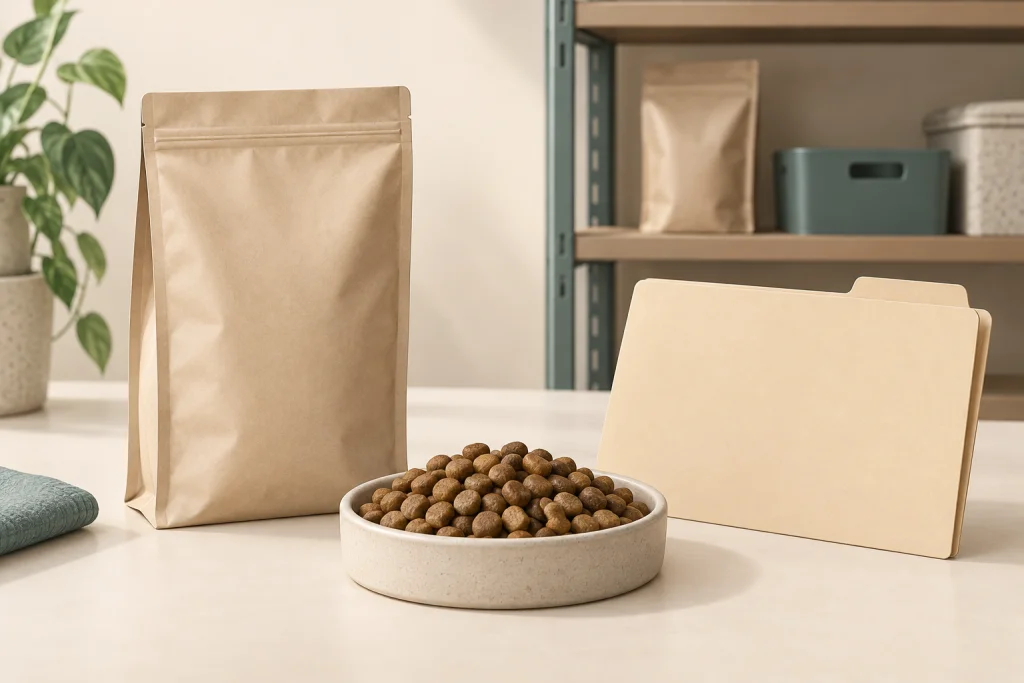
A shelf-life statement for private-label extruded cat or dog kibble needs results tied to the finished formula, final bag and stated storage conditions, together with an explanation of why those results support the proposed duration. I would start with the documents that connect the month figure to your actual product:
- The finished formula reference and study sample identifiers are available.
- The tested bag and proposed sale bag have specifications for comparison.
- The proposed duration and exact storage wording are written down.
- The report includes methods, sampling points, results, acceptance criteria and the reason for its endpoint. 12
What Must a Shelf-Life Statement Cover?
A shelf-life statement applies to a specific finished kibble, final bag and set of storage conditions. The supporting assessment addresses microbiological safety, nutritional quality and sensory quality throughout the proposed period, with the product and package clearly identified. 1
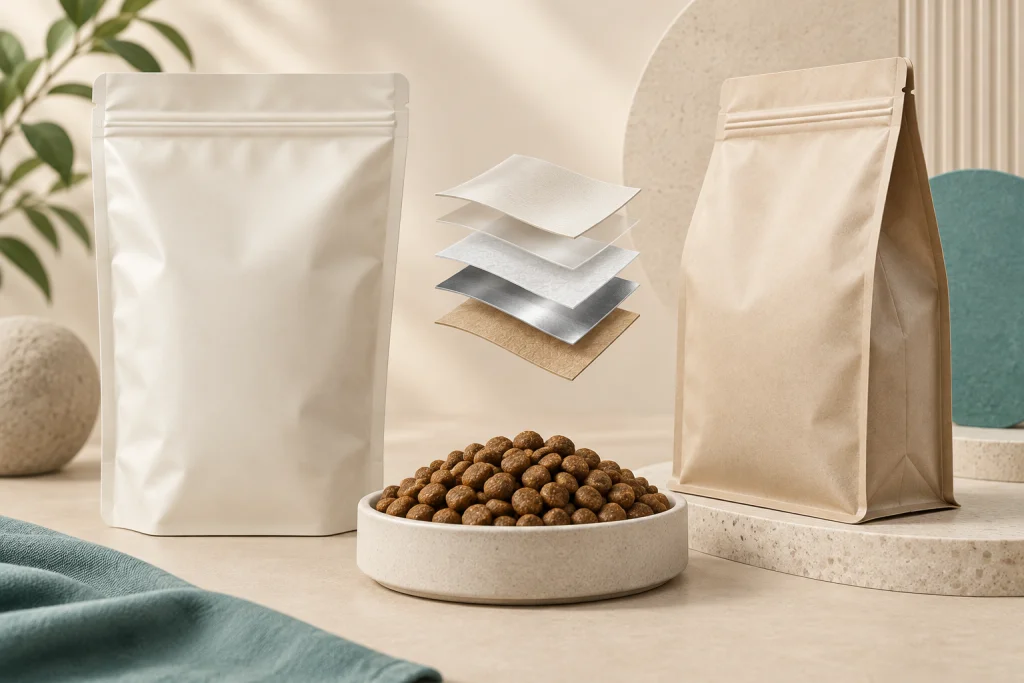
FEDIAF's safety guide defines shelf life through these qualities under specified storage conditions. Microbiological safety concerns microbial hazards; sensory quality concerns characteristics such as smell, appearance and texture. The definition describes the scope of an assessment without prescribing a fixed test panel for every kibble.
Place the formula identifier and revision beside the study sample description. For packaging, compare the tested bag with the proposed sale bag using the specification reference, pack size, material construction and closure. The study's storage conditions also need to be compared with the wording proposed for the label.
I would resolve a formula or package mismatch before carrying an existing duration into your label artwork. A mismatch leaves the report's applicability unresolved. Your team identifies the intended product and bag; the technical reviewer documents whether existing results apply or whether further study is needed. 1
Which Stability Results Support the Duration?
A useful stability record connects identified samples with storage conditions, suitable methods, results at successive time points and the criteria used to judge them. Its conclusion explains why the proposed endpoint is justified for the finished product. 23
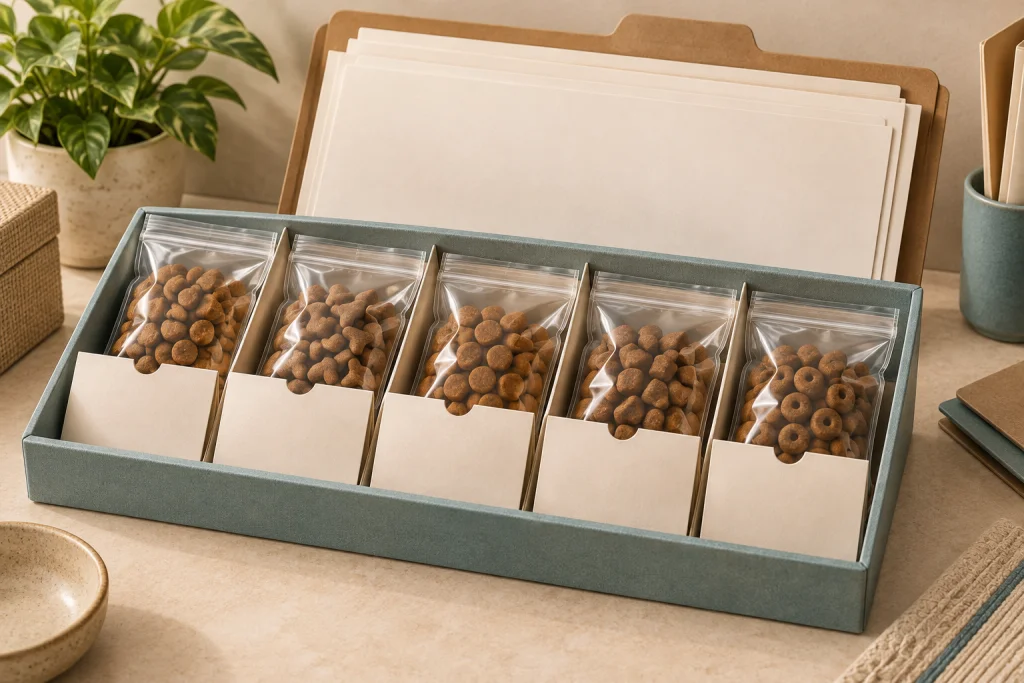
GAPFA's dog and cat food guidance calls for methods demonstrated to be accurate for pet-food matrices and appropriate validation of nutritional adequacy throughout the guaranteed shelf life. A matrix is the food material being tested. Nutritional adequacy concerns whether the food meets its intended nutritional purpose.
Acceptance criteria are the limits or descriptions used to judge a result. The endpoint is the end of the period being justified. I judge the report by how clearly its results support that endpoint.
| Report entry | Comparison before approval | Next step for a gap |
|---|---|---|
| Methods and reported results | Are methods, units and reporting bases comparable across sampling points? | The report provider explains any differences before the results are compared. |
| Acceptance criteria | Does each relevant result meet its stated criterion? | The technical reviewer records any deviation and its effect on the proposed duration. |
| Final sampling point | Does the study reach the proposed period? | A later proposed endpoint needs a documented technical basis or further study. |
Sensory analysis can help estimate shelf life by tracking product changes. An acceptable sensory result does not establish continued nutritional adequacy. Before ordering, your review file needs to show how the relevant quality areas are addressed and which conclusions remain open. 23
What Can Be Stated Before Validation?
Before product-specific support is complete, the shelf-life duration remains a proposal. Published storage periods describe the tested foods and conditions; they do not establish a commercial date for another formula or package or commit ZoePetSup to that duration. 34
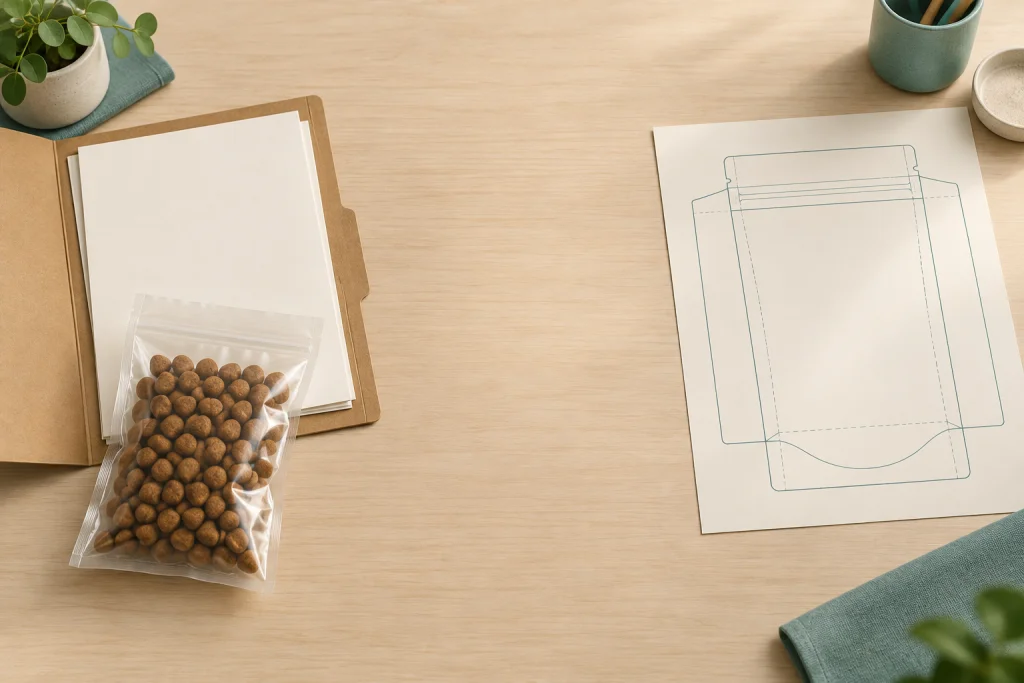
One published kibble study assessed samples at 0, 3, 6, 9 and 12 months under ambient conditions. Its freezer bags were punctured to allow air exchange. A separate research report held kibble at elevated temperature and humidity for 18 weeks. These periods belong to those experiments and need to be read with their product, packaging and storage details.
Your project can still record a requested duration and proposed storage wording. Until the applicability and endpoint questions are resolved, keep the duration marked as proposed in the project specification and separate from approved label artwork.
Before ordering, separate the study requirements proposed by your brand from the manufacturer's written commitments. The project specification should name the report provider, technical reviewer and person responsible for approving label wording. Industry guidance alone supplies no ZoePetSup shelf-life period. 34
Conclusion
An inquiry about shelf life is useful when it identifies the formula and package behind the proposed wording and the technical questions still open.
For your project, see the private-label dry-food category and provide:
- Destination country
- Cat or dog food
- Sales channel
- Price positioning
- Packaging sizes
- Expected quantity
- Formula reference, proposed bag specification and storage wording
- Proposed shelf-life duration and any available stability report
These details focus the discussion on the product and packaging for your OEM or private-label dry-food project before the shelf-life wording is finalized.
References
-
FEDIAF Safety Guide (February 2018). Retrieved 2026-09-29. ↩ ↩ ↩
-
Guidance on Dog and Cat Food Nutrition Guidelines. Retrieved 2026-10-04. ↩ ↩ ↩
-
The Impact of Rendered Protein Meal Oxidation Level on Shelf-Life, Sensory Characteristics, and Acceptability in Extruded Pet Food - PMC. Retrieved 2026-10-04. ↩ ↩ ↩ ↩
-
The impact of rendered protein meal level of oxidation on shelf life and acceptability in extruded pet foods.. Retrieved 2026-10-04. ↩ ↩
From research to a product brief
Explore the related OEM direction
Skin & Coat Cat Food OEM
Develop a skin and coat cat food SKU with ingredient specifications, packaging, sample checks and evidence for label wording. Discuss OEM with ZoePetSup.
Explore this direction
Baked Dog Food OEM & Private Label
Plan baked dog food OEM development: compare process routes, texture, breakage, packaging and sample requirements before a private label quotation.
Explore this direction